
Why Seek Fertility Consultation: Empowering Your Journey
- 17 hours ago
- 10 min read

Facing uncertainty about your fertility can feel overwhelming, especially when every year holds new questions about your options and outcomes. For women over 35, the shifting landscape of ovarian reserve means decisions around donor eggs, early assessment, and comprehensive support are no longer just medical—they are deeply personal. A fertility consultation takes you beyond routine care, blending clinical expertise with emotional guidance to help you discover what truly fits your needs and your life.
Table of Contents
Key Takeaways
Point | Details |
Importance of Consultation | A fertility consultation provides a personalized assessment of reproductive health and potential treatment options tailored to individual circumstances. |
Value of Early Assessment | Seeking fertility assessment early can significantly enhance decision-making power, particularly for women over 35, by revealing crucial fertility-related factors. |
Comprehensive Evaluation | A thorough consultation includes a detailed medical history, physical assessments, and discussions on multiple treatment pathways to facilitate informed choices. |
Addressing Myths | Dispelling common misconceptions about fertility is essential for understanding one’s reproductive status and exploring all available options effectively. |
What Is a Fertility Consultation?
A fertility consultation is your first meaningful step toward understanding your reproductive options and creating a personalized plan forward. It’s an appointment with a fertility specialist where you discuss your unique situation, medical history, and potential treatment pathways for your specific fertility challenges.
Unlike a routine gynecology visit, a fertility consultation goes deeper. It combines medical assessment with psychosocial support to address both the clinical and emotional dimensions of your journey. Psychoeducational support and counseling help you process your experiences while gaining clarity about your options.
What Happens During Your Consultation
Your fertility specialist will gather comprehensive information to understand your specific situation:
Medical history: Current and past reproductive health, medications, surgeries, and any previous fertility treatments
Cycle and fertility patterns: Length, regularity, and any symptoms you’ve noticed
Partner information: If applicable, your partner’s medical history and reproductive health
Lifestyle factors: Stress levels, exercise, diet, work environment, and sleep quality
Family goals: Number of children desired, timeline preferences, and any genetic concerns
The specialist will also explain diagnosis and treatment options tailored to your condition, helping you understand what’s realistic and what fits your values.
Why This Consultation Matters for Women Over 35
At this stage of life, time carries different weight. Your ovarian reserve—the number and quality of eggs available—changes annually. A consultation provides clarity about your current reproductive status and whether interventions like egg freezing, donor eggs, or other advanced options make sense for you.
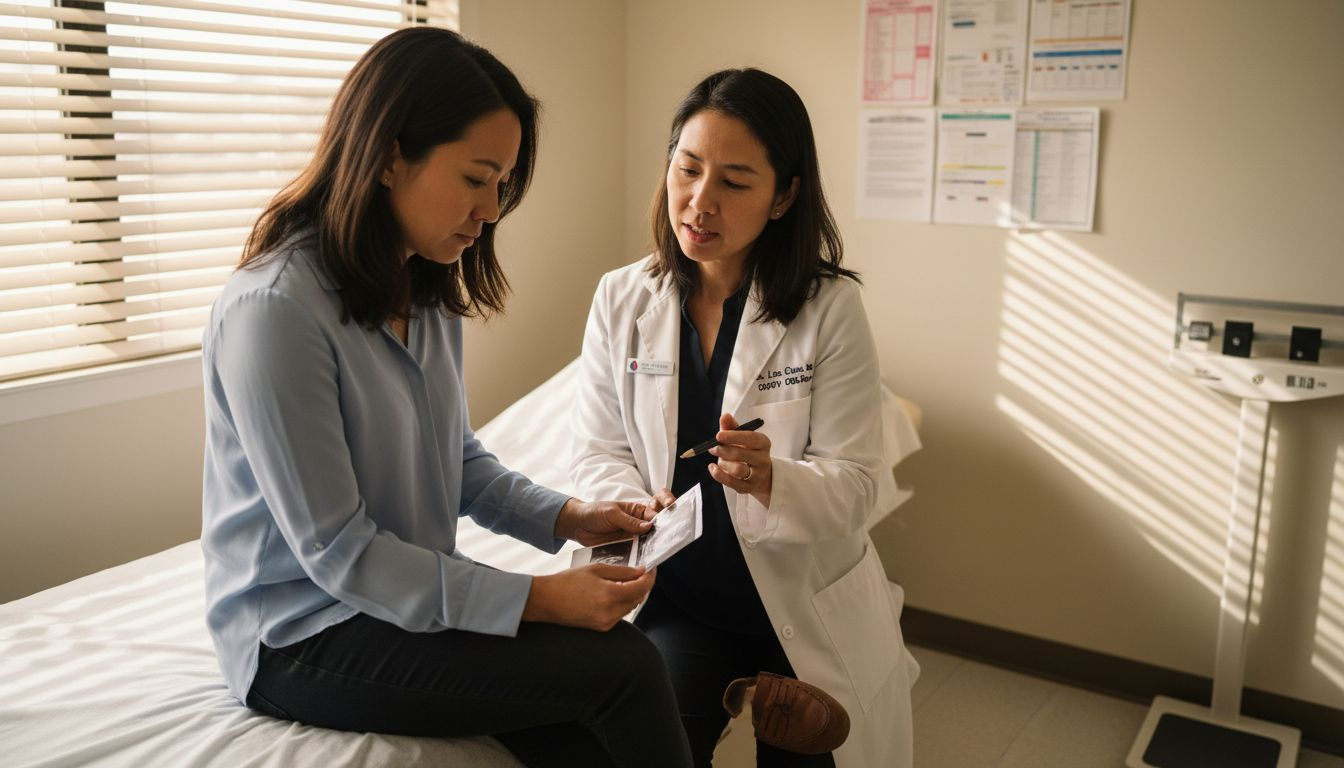
You’ll learn whether your challenges stem from egg quality, egg quantity, hormone levels, structural issues, or other factors. This distinction changes everything about your treatment strategy.
What You’ll Leave With
A comprehensive fertility consultation produces concrete outcomes:
Clear understanding of your fertility status
Specific diagnosis (or acknowledgment of unexplained infertility)
Multiple treatment pathway options with success rates
Realistic timeline expectations
Cost breakdown and insurance information
Next steps and follow-up testing if needed
A fertility consultation transforms uncertainty into actionable direction, helping you move forward with confidence rather than guesswork.
This is not a sales pitch for one specific treatment. It’s a clinical assessment designed to answer your questions and present options that align with your situation, budget, and goals.
Pro tip: Bring a partner, trusted friend, or written list of questions to your consultation—having support and staying organized helps you absorb information and make clearer decisions about your next steps.
Key Benefits of Early Assessment
Early fertility assessment changes your timeline and your odds. When you seek guidance sooner rather than later, you gain access to information that fundamentally shifts your decision-making power. This is especially true for women over 35, where each year matters.
Time Is Your Competitive Advantage
Waiting creates a silent cost. Early fertility education and assessment identifies reproductive health risks before they become treatment barriers. You’ll understand your actual fertility status instead of assumptions based on age alone.
At 35, 36, or 37, you might have significant reproductive capacity remaining. Or you might benefit from egg freezing or donor options. The only way to know is through assessment.
What Early Assessment Reveals
You’ll gain clarity on factors that directly impact your fertility:
Egg reserve and quality: Through hormone testing and ultrasound imaging
Ovulation patterns: Whether you’re ovulating regularly and when
Structural issues: Blocked tubes, fibroids, or uterine factors
Partner fertility status: If applicable, comprehensive semen analysis
Metabolic and immune factors: Conditions affecting your reproductive health
Lifestyle modifications: Specific changes that improve your fertility odds
Each finding is actionable. You’re not getting a label; you’re getting a map.
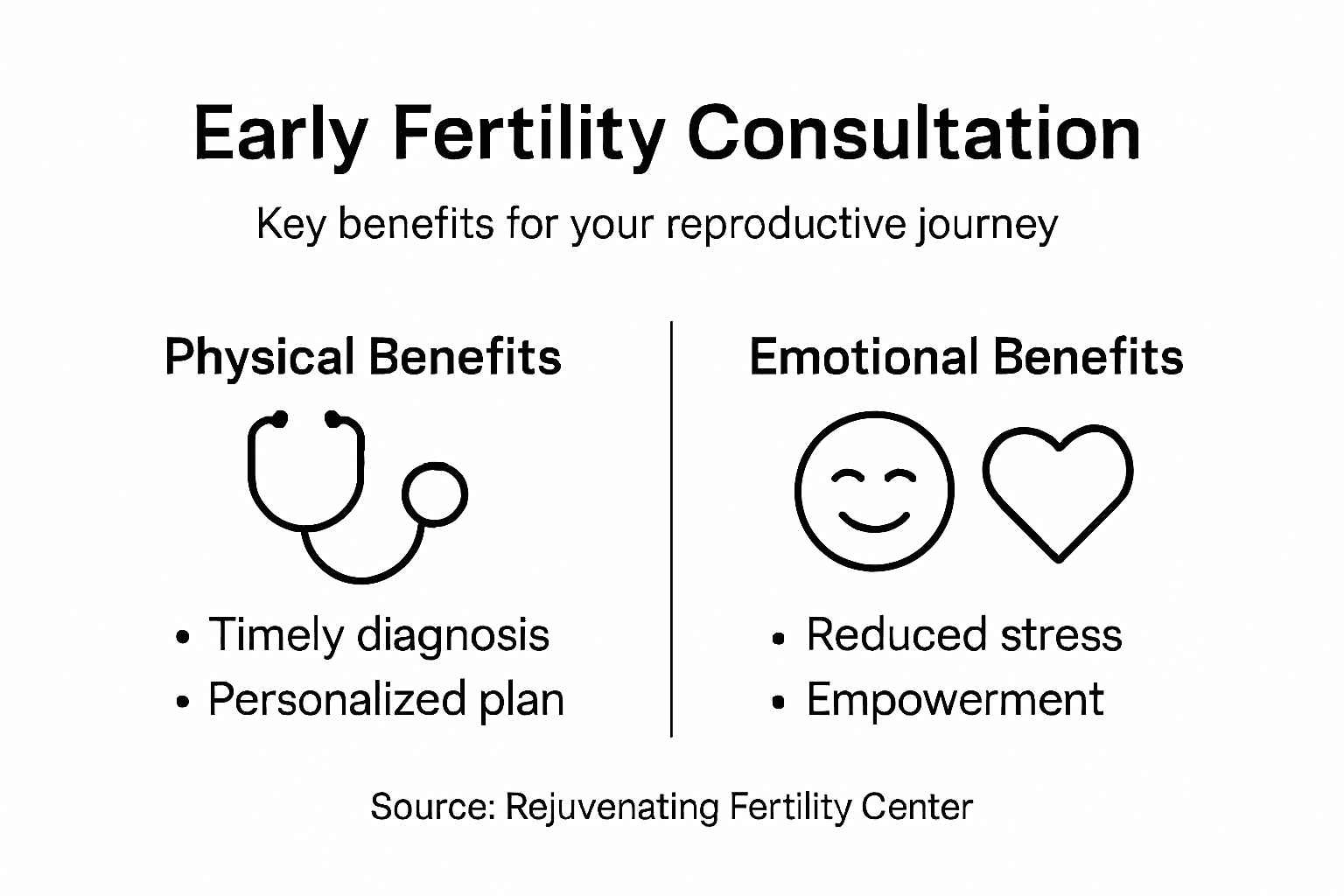
Emotional and Physical Benefits
Early diagnosis and timely support reduce the stress that comes with uncertainty. You stop wondering and start knowing. This shift from anxiety to clarity affects your sleep, your relationships, and your overall wellbeing.
Physically, understanding your fertility profile lets you optimize before treatment begins. Better nutrition, targeted supplementation, stress reduction, and timing adjustments all improve your outcomes.
Treatment Success Starts With Knowledge
When you do pursue treatment—whether IUI, IVF with your own eggs, egg freezing, or donor options—you’re making informed choices. Early assessment ensures your treatment plan matches your actual physiology, not a generic protocol.
Women who understood their fertility status before treatment reported higher satisfaction with their outcomes, even when those outcomes weren’t what they initially hoped for.
Early assessment transforms infertility from a mystery into a solvable problem with clear next steps.
You’re not just seeking answers. You’re taking control of your reproductive timeline while you still have time to act on what you learn.
Pro tip: Schedule your assessment during days 2–4 of your cycle, when baseline hormone levels are most accurate—this timing ensures your specialist captures your true fertility picture.
How the Consultation Process Works
A fertility consultation follows a structured yet personalized pathway designed to understand your complete picture. Nothing feels rushed. The process builds from your history through testing to actionable recommendations tailored specifically to you.
Step One: Detailed History Review
Your specialist begins by understanding who you are and what you’ve experienced. This goes far beyond a standard medical form. Detailed review of reproductive and general health histories includes menstrual patterns, previous pregnancies, surgeries, medications, and lifestyle habits.
For women over 35, this conversation also explores your personal timeline and goals. How many children do you want? What’s your realistic timeframe? Have you frozen eggs previously? These conversations shape everything that follows.
Step Two: Comprehensive Physical Assessment
Your specialist will perform a thorough examination:
Pelvic ultrasound: Visual assessment of your ovaries, uterus, and reproductive structures
Hormone bloodwork: Testing FSH, LH, estrogen, progesterone, and other key markers
Semen analysis: If you have a partner, this evaluates sperm count, motility, and morphology
Risk factor assessment: Screening for conditions like PCOS, endometriosis, or immune factors
These objective findings eliminate guesswork. You’re seeing concrete data about your fertility status.
Here is a comparison of common fertility assessment options and their primary purposes:
Assessment Type | Main Purpose | Typical Use Case |
Hormone Bloodwork | Identifies hormone balance | Evaluating ovulation patterns |
Pelvic Ultrasound | Visualizes reproductive organs | Checking ovarian reserve and structure |
Semen Analysis | Assesses partner’s fertility | Confirming sperm health for couples |
Genetic Screening | Detects inherited risks | Clarifying risks for future children |
Step Three: Interpretation and Education
Your specialist explains exactly what the results mean for you. Not generic information—your information. You’ll learn whether your challenges stem from diminished ovarian reserve, hormone imbalances, structural issues, partner factors, or unexplained causes.
This is where you get real answers. No assumptions. No vague reassurances. Just clarity.
Step Four: Treatment Pathway Discussion
Now comes the strategic conversation. Your specialist presents multiple options:
Lifestyle modifications that improve outcomes
Fertility preservation (egg freezing) if relevant to your age and goals
IUI, IVF with your own eggs, or donor egg options
Supplementary treatments like immune support or ovarian rejuvenation
Realistic success rates specific to your profile
Each option gets honest discussion about timeline, cost, and realistic outcomes.
Your consultation creates a personalized roadmap matched to your actual reproductive status, not your age or assumptions.
You’ll walk out with a clear next step, not a sales pitch for the most expensive option.
Pro tip: Request a written summary of your results, diagnosis, and recommended treatment plan before leaving—this prevents misunderstandings and gives you time to process information without pressure.
Common Myths and Misconceptions
Fertility carries more misconceptions than almost any other health topic. These false beliefs delay consultation, create unnecessary shame, and keep women from exploring options that could change their outcomes. At 35 and beyond, clearing away these myths becomes urgent.
Myth: Age Alone Determines Your Fertility
The biggest misconception? That reaching 35 means your fertility automatically declines at a predictable rate. Reality is messier and often more hopeful. Yes, age matters. But multiple factors including male and female health, lifestyle, and medical history contribute significantly to fertility outcomes.
Women at 36 with excellent egg quality and no underlying conditions have better odds than a 32-year-old with diminished ovarian reserve. Your actual fertility depends on your specific biology, not your birthday.
Myth: Infertility Is Rare or Permanent
Infertility feels isolating because you don’t see it discussed openly. But it affects millions of women globally. More importantly, many causes are reversible or treatable. Hormonal imbalances, structural issues, lifestyle factors, and immune conditions often respond to intervention.
Even when causes seem permanent, modern reproductive medicine offers pathways forward—egg freezing, donor options, adoption, and more.
Myth: It’s Only a Woman’s Problem
This one carries real damage. Partner fertility matters equally. Male factor infertility—low sperm count, poor motility, morphology issues—accounts for roughly 40% of infertility cases. Neither partner should carry shame or responsibility alone.
A comprehensive consultation includes assessment of both partners, removing this false burden.
Myth: If You Haven’t Conceived Naturally, You Never Will
Infertility doesn’t mean sterility. Women who haven’t conceived naturally often conceive with assisted reproduction. The right intervention addresses your specific barrier, whether that’s timing, structural issues, or egg quality.
Myth: Fertility Treatment Is Your Only Option
Consultation reveals options you might not have considered:
Lifestyle optimization: Nutrition, stress reduction, exercise timing
Medical treatment: Medication, surgery, or immune support
Fertility preservation: Egg freezing while you explore options
Assisted reproduction: IUI, IVF with your eggs, donor options
Counseling support: Processing grief, making decisions aligned with your values
Education counters myths with comprehensive understanding of fertility, including reversible causes, lifestyle impacts, and treatment possibilities.
You’re not choosing between “natural” and “treatment.” You’re choosing the path that matches your biology and goals.
Pro tip: When researching fertility information online, prioritize sources from medical organizations (ASRM, HFEA) and peer-reviewed journals over blogs or wellness influencers—this prevents myth-based decisions.
Risks, Costs, and Expert Guidance
Fertility consultation doesn’t just reveal possibilities. It also addresses the realities you need to understand before moving forward—medical risks, financial implications, and emotional dimensions. Honest conversation about these factors separates informed decision-making from guesswork.
Understanding Medical Risks
Fertility treatments carry genuine but manageable risks. The most common is multiple pregnancy—carrying twins, triplets, or more. While advances in single-embryo transfer have reduced this significantly, it remains a possibility with IVF. Multiple pregnancies carry higher risks for both mother and babies.
Other potential risks include:
Ovarian hyperstimulation syndrome (OHSS): Ovaries respond excessively to hormone stimulation
Infection or bleeding: From egg retrieval procedures
Blood clots: Rare but serious complication of IVF
Emotional stress: Often underestimated but significant
Fertility treatments are carefully managed by expert teams who minimize these risks through protocols, monitoring, and individualized dosing. Your specialist will discuss your personal risk factors and how to mitigate them.
The Financial Reality
Costs vary dramatically based on your treatment pathway and location. A single IVF cycle in the United States ranges from $12,000 to $18,000. Egg freezing costs $8,000–$15,000 plus annual storage fees. Donor egg cycles typically run $20,000–$30,000.
These are significant expenses. Most insurance plans don’t cover fertility treatment, though some employers offer fertility benefits.
Your consultation should include:
Clear itemized cost breakdown
What’s included in quoted prices
Payment plan options
Insurance coverage investigation
Realistic number of cycles needed for your situation
Don’t accept vague pricing. Demand specificity.
Below is a summary of typical fertility treatment costs in the United States:
Treatment Option | Average Cost Range | Notes |
IVF Cycle | $12,000–$18,000 | May require multiple cycles |
Egg Freezing | $8,000–$15,000 + storage | Annual storage fees extra |
Donor Egg Cycle | $20,000–$30,000 | Higher cost, includes donor fees |
Emotional and Psychological Support
This matters as much as medical expertise. Qualified fertility counselors help patients understand financial costs and manage expectations while navigating the psychological complexity of treatment.
Fertility journeys involve grief, hope, uncertainty, and sometimes trauma. Quality clinics provide:
Individual or couples counseling
Group support with others on similar journeys
Coping strategies for negative results
Decision-making support for next steps
Crisis intervention if needed
Psychological support isn’t optional. It’s medical care.
Expert guidance ensures you understand risks, costs, and emotional demands before committing to treatment.
Your specialist should address all three openly. If they brush past financial concerns or dismiss emotional impact, that’s a red flag.
Pro tip: Before your consultation, list your financial limits and emotional boundaries—knowing what you can realistically handle helps your specialist recommend treatments aligned with your actual capacity, not just medical possibility.
Take Control of Your Fertility Journey with Expert Guidance
Facing uncertainty about your reproductive health can be overwhelming, especially when age and unique challenges like diminished ovarian reserve or complex fertility factors come into play. This article highlights the importance of a comprehensive fertility consultation that not only clarifies your current fertility status but also empowers you with personalized options tailored to your medical history, lifestyle, and family goals.
At Rejuvenating Fertility Center, we understand how critical early assessment and informed decision-making are for women over 35 and those exploring advanced solutions such as egg freezing, donor egg IVF, or ovarian rejuvenation. Our cutting-edge therapies and compassionate care are designed to transform uncertainty into confident action with realistic treatment pathways and emotional support.
Ready to uncover your fertility potential and start a customized plan that fits your needs? Visit our consultation page today to schedule your fertility consultation. Take the first step now to empower your journey with clarity and hope from the experts who prioritize your wellbeing and success.
Frequently Asked Questions
What is a fertility consultation?
A fertility consultation is an initial appointment with a fertility specialist to discuss your reproductive options, medical history, and potential treatment pathways tailored to your specific fertility challenges.
Why is it important to seek a fertility consultation if I’m over 35?
As women age, ovarian reserve and egg quality can decline, making it essential to understand your reproductive status. A consultation provides clarity on your fertility options and allows for proactive planning, which can be critical at this life stage.
What can I expect during my fertility consultation?
You can expect a detailed review of your medical history, a comprehensive physical assessment, hormone testing, and a discussion of potential treatment pathways. Your specialist will provide a clear understanding of your fertility status and discuss personalized next steps.
How does early assessment affect my fertility treatment options?
Early fertility assessment provides critical insights into your reproductive health, allowing for timely intervention and better-informed decisions. This can lead to improved treatment outcomes and help optimize your overall fertility journey.
Recommended
Comments