
Repeated IVF Failure: 80% Embryo Aneuploidy in Women 35+
Updated: Mar 18
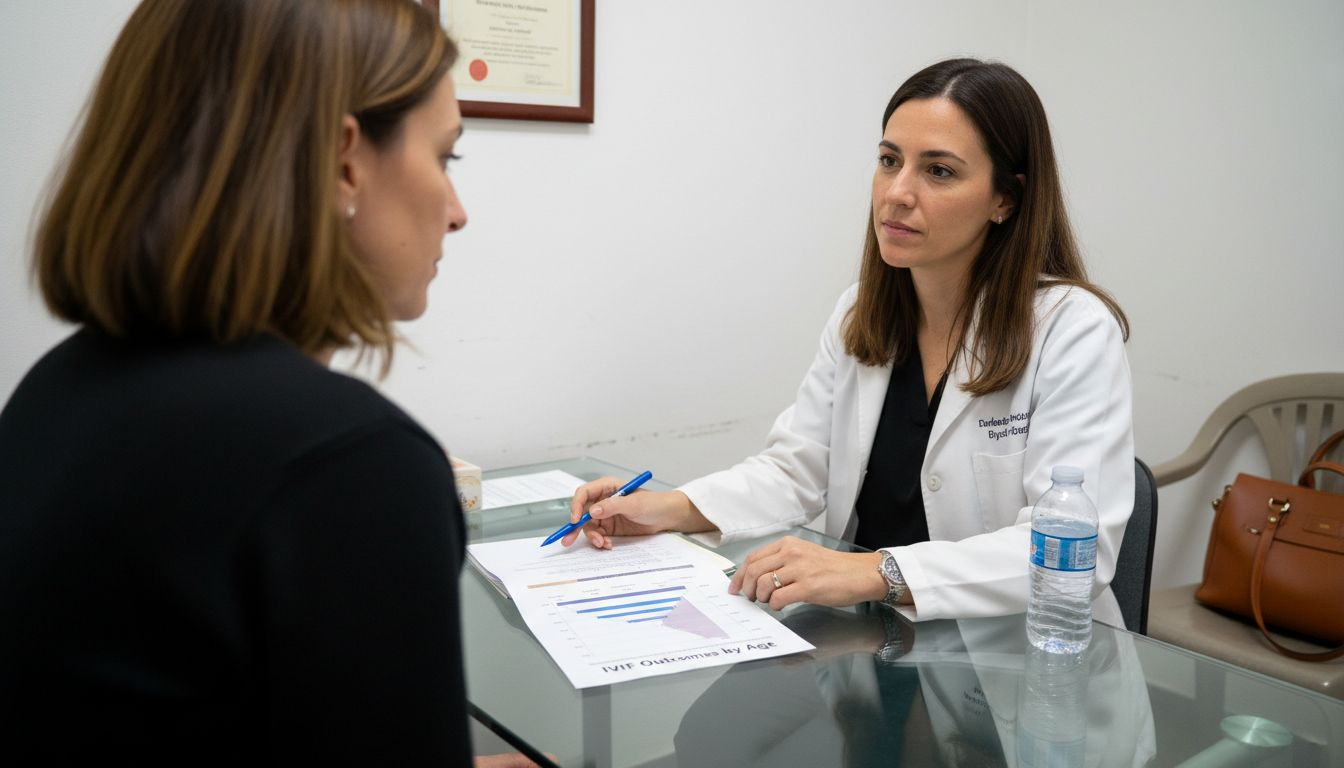
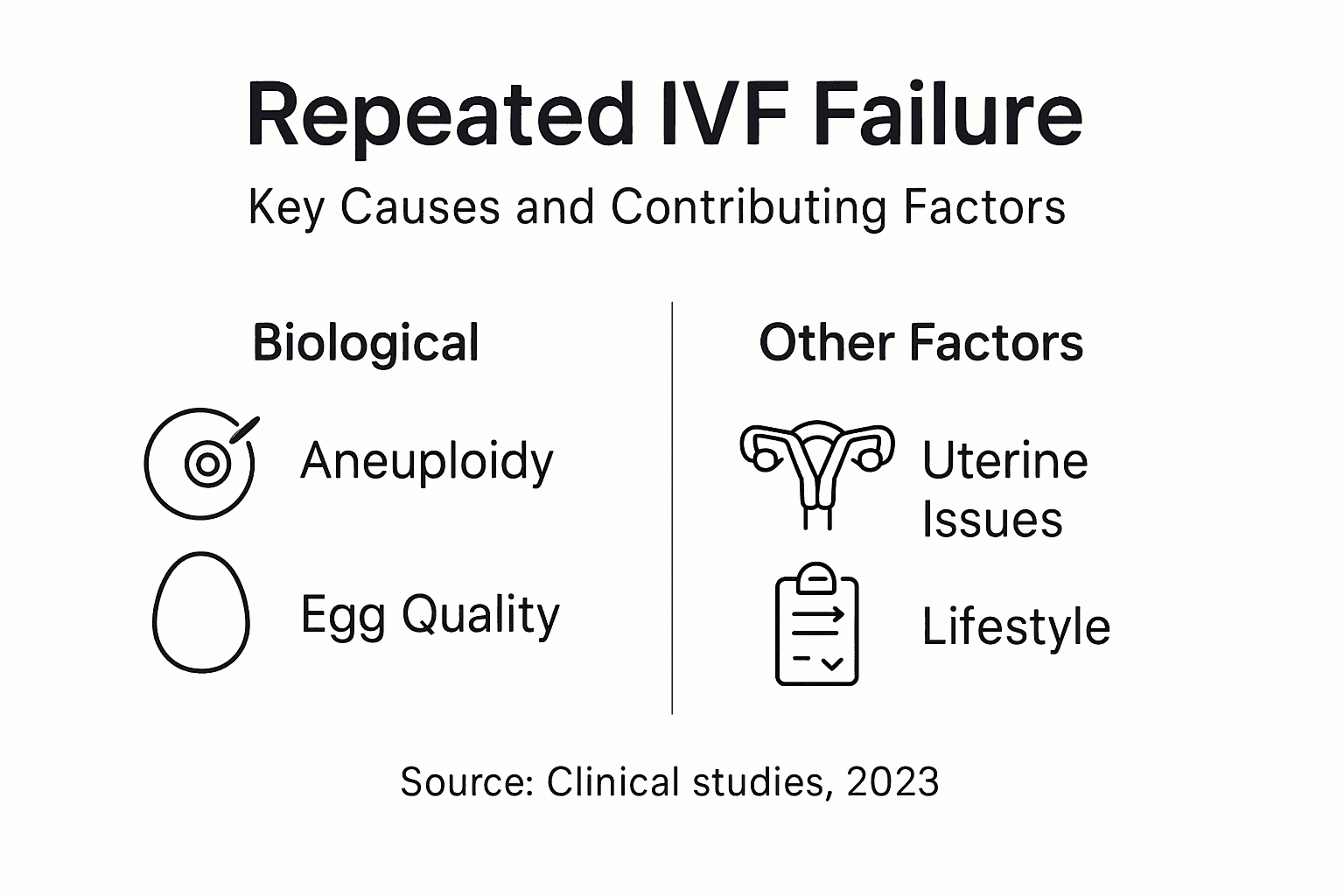
Up to 80% of repeated IVF failures in women over 35 stem from chromosomal abnormalities in embryos, yet many patients remain unaware of this primary cause. If you’ve experienced multiple unsuccessful cycles despite good quality embryos, you’re not alone. Understanding the biological, structural, and lifestyle factors behind repeated failures empowers you to pursue targeted treatments that can dramatically improve your chances of a successful pregnancy.
Table of Contents
Key Takeaways
Point | Details |
Embryonic aneuploidy causes most failures | Chromosomal abnormalities account for 50-80% of repeated IVF failures in women over 35. |
Uterine issues are common | Up to 30% of repeated failure patients have structural uterine abnormalities affecting implantation. |
Lifestyle factors matter significantly | Smoking reduces IVF success by 30%, obesity by 10-20% in live birth rates. |
Personalized treatments improve outcomes | Tailored approaches can increase live birth rates by 20-30% for repeated failure patients. |
Comprehensive testing is essential | Identifying specific causes through thorough diagnostics enables targeted, effective interventions. |
Understanding Repeated IVF Failure: An Overview
Repeated IVF failure typically means three or more unsuccessful cycles with good quality embryos transferred. For women over 35, this scenario occurs more frequently than many expect, with failure rates climbing as maternal age advances. The emotional toll is immense. Each unsuccessful cycle brings renewed frustration, anxiety, and diminished hope for achieving pregnancy.
Why does this happen? The causes are multifactorial, spanning biological, structural, and modifiable factors. Repeated IVF failure significantly impacts emotional wellbeing and treatment outlook for women over 35, making it critical to identify underlying issues. Recognizing specific causes allows your fertility team to shift from generic protocols to personalized strategies that address your unique challenges.
Key aspects to understand include:
Age related decline in egg quality leading to chromosomal abnormalities
Uterine structural problems preventing embryo implantation
Immunological dysfunctions attacking embryos
Genetic factors inherited from parents
Lifestyle and environmental exposures reducing success
Each factor can exist independently or combine with others. The good news? Identifying your specific causes opens pathways to targeted treatments that substantially improve your odds. This article explores each factor in depth, providing you with knowledge to guide informed conversations with your fertility specialist.
Age-Related Causes of Repeated IVF Failure
Advanced maternal age stands as the single most influential factor in repeated IVF failure. As you age beyond 35, your ovarian reserve naturally declines. Fewer eggs remain, and more importantly, egg quality deteriorates significantly. This quality decline manifests primarily as chromosomal abnormalities, medically termed aneuploidy.
Embryonic aneuploidy accounts for approximately 50-80% of failed IVF cycles in women over 35 with repeated failures. Aneuploid embryos carry an incorrect number of chromosomes. While they may appear healthy under microscopic evaluation, these embryos typically fail to implant, result in early miscarriage, or lead to non viable pregnancies. The relationship between age and aneuploidy is stark and unavoidable.
Age Group | Aneuploidy Rate | Typical IVF Failure Risk |
Under 35 | 30-40% | Low to Moderate |
35-37 | 40-50% | Moderate |
38-40 | 50-60% | Moderate to High |
41-42 | 60-75% | High |
Over 42 | 75-90% | Very High |
Beyond aneuploidy, poor embryo quality affects other critical processes. Embryos with mitochondrial dysfunction, fragmented cells, or abnormal development patterns struggle to implant successfully. Even if implantation occurs, these embryos often fail to develop into viable pregnancies. Your body’s natural selection process eliminates most abnormal embryos early, but not all screening happens perfectly.
Pro Tip: Request an AMH test and antral follicle count to assess your ovarian reserve accurately. These results help your doctor customize stimulation protocols and set realistic expectations for your fertility treatments for women over 35, maximizing your chances with the eggs you have.
Understanding your age related risks doesn’t mean accepting failure. It means pursuing smarter strategies like preimplantation genetic testing and optimized embryo selection to work around biological limitations effectively.
Uterine, Immunological, and Genetic Factors Contributing to Repeated IVF Failure
Even chromosomally normal embryos require a receptive uterine environment to implant and grow. Structural uterine abnormalities create hostile conditions that prevent successful implantation. Uterine abnormalities such as fibroids, polyps, and adenomyosis are found in up to 30% of women with repeated IVF failure. These conditions physically distort the uterine cavity or impair endometrial blood flow.
Common uterine issues include:
Submucosal fibroids protruding into the uterine cavity
Endometrial polyps interfering with implantation sites
Adenomyosis causing chronic uterine inflammation
Thin endometrium failing to reach adequate thickness
Intrauterine adhesions or scar tissue from prior procedures
Immunological factors represent another hidden cause. Your immune system normally tolerates the semi foreign embryo. However, abnormalities in natural killer cell activity, elevated inflammatory cytokines, or autoantibodies can attack embryos during implantation. These immune dysfunctions often go undiagnosed without specialized testing, yet they significantly impact immunology in IVF success.
Genetic factors from parents also contribute. Balanced chromosomal translocations or inversions in either partner can produce embryos with unbalanced genetics, leading to implantation failure or miscarriage. These parental abnormalities affect a smaller percentage of cases but are correctable through specific embryo selection.
Factor Type | Common Causes | Diagnostic Tests |
Uterine | Fibroids, polyps, adenomyosis, thin lining | Ultrasound, hysteroscopy, MRI |
Immunological | NK cell dysfunction, autoantibodies, cytokines | NK assay, ANA panel, cytokine profile |
Genetic | Parental translocations, inversions | Karyotyping, chromosomal microarray |
Pro Tip: Comprehensive immunological screening can uncover treatable causes often overlooked in standard fertility workups. If you’ve had multiple failures with good embryos, request immune testing to rule out hidden factors sabotaging implantation.
Addressing these issues requires targeted diagnostics followed by precise interventions like surgical correction, immune modulation, or genetic counseling with PGT.
Lifestyle and Environmental Contributors to Repeated IVF Failure
While biological factors dominate, modifiable lifestyle choices significantly influence IVF outcomes. Smoking reduces IVF live birth rates by approximately 30%, while obesity is linked to 10-20% lower pregnancy rates after IVF. These statistics highlight the real world impact of controllable behaviors on fertility success.
Smoking damages egg quality through oxidative stress and reduces ovarian reserve prematurely. Nicotine and toxins in cigarettes impair embryo development and implantation. If you smoke, quitting represents one of the most impactful changes you can make before attempting another IVF cycle.
Obesity disrupts hormonal balance, particularly insulin and reproductive hormones. Excess weight increases inflammation and alters endometrial receptivity. Even modest weight loss of 5 to 10% can improve ovulation, egg quality, and IVF success rates substantially.
Other lifestyle factors affecting IVF outcomes include:
Excessive alcohol consumption reducing embryo quality and implantation
Chronic stress elevating cortisol levels that interfere with reproduction
Poor nutrition lacking essential vitamins and antioxidants
Sedentary lifestyle contributing to metabolic dysfunction
Environmental toxin exposure from plastics, pesticides, and chemicals
Stress deserves special attention. Constant anxiety and depression create hormonal imbalances that subtly undermine fertility. Mind body interventions like yoga, meditation, and counseling have shown benefits in improving IVF outcomes by reducing stress related interference.
Pro Tip: Reducing stress through regular mindfulness practice and optimizing your weight to a healthy BMI before IVF can boost success rates significantly. Explore natural ways to improve IVF success that complement medical treatments effectively.
Taking control of modifiable factors empowers you. While you cannot reverse age, you absolutely can optimize your body’s condition to support the best possible IVF outcome.
Common Misconceptions About Repeated IVF Failure
Misunderstandings about why IVF fails repeatedly can lead patients down unproductive paths. Clearing up these myths helps you focus energy on evidence based solutions.
Myth: IVF failures result mainly from laboratory errors or physician mistakes. While technical quality matters, embryology labs follow rigorous standards. The reality is that embryo chromosomal abnormalities and uterine environment issues cause the vast majority of failures, not lab mishaps.
Myth: Male factor infertility explains most repeated IVF failures. Male factors certainly contribute to initial infertility diagnoses. However, for women over 35 facing repeated failures, female age related factors like egg quality and uterine receptivity predominate as primary causes.
Myth: Age doesn’t significantly affect embryo quality or IVF success. This dangerous misconception delays appropriate interventions. Age strongly correlates with embryo aneuploidy rates and implantational failure. Denying this reality prevents patients from pursuing age appropriate strategies like donor eggs when medically advisable.
Additional myths to reject:
One failed IVF cycle means IVF will never work for you
Repeated failures indicate something fundamentally wrong that cannot be fixed
All fertility clinics offer the same level of expertise in diagnosing failure causes
Stress alone causes IVF failure, so just relaxing will solve the problem
Understanding these realities helps you advocate for thorough diagnostic workups rather than repeating identical failed protocols hoping for different results. Knowledge empowers better decision making.
Diagnostic Framework for Repeated IVF Failure
Systematic evaluation identifies specific causes driving your repeated failures, enabling targeted treatment. A comprehensive diagnostic approach investigates multiple potential factors methodically.
Ovarian reserve assessment measures remaining egg quantity and quality using AMH blood test and antral follicle count via ultrasound. These baseline tests inform expectations and stimulation strategies.
Uterine cavity evaluation employs transvaginal ultrasound, saline infusion sonography, or hysteroscopy to visualize structural abnormalities like fibroids, polyps, or adhesions. MRI provides detailed imaging when complex issues are suspected.
Genetic screening includes karyotyping for both partners to detect chromosomal translocations or abnormalities. Preimplantation genetic testing for aneuploidy on embryos identifies chromosomally normal embryos for transfer.
Immunological assessment tests natural killer cell activity, measures inflammatory cytokines, and screens for autoantibodies that may attack embryos. Specialized labs perform these advanced immune panels.
Endometrial receptivity analysis uses molecular testing to determine your personalized implantation window, ensuring embryo transfer timing matches peak receptivity.
Diagnostic Test | Purpose | Typical Findings in Repeated Failure |
AMH, AFC | Ovarian reserve assessment | Low reserve indicating diminished egg quantity |
Hysteroscopy | Uterine cavity visualization | Polyps, fibroids, adhesions, thin lining |
Karyotyping | Parental genetic screening | Balanced translocations, chromosomal inversions |
PGT-A | Embryo chromosomal testing | High aneuploidy rates in embryos |
NK cell assay | Immune function evaluation | Elevated NK cell activity, autoantibodies |
Your fertility specialist should customize this diagnostic battery based on your history and prior test results. Understanding the IVF process guide helps you grasp where diagnostics fit into treatment planning. Don’t hesitate to request additional testing if standard workups fail to identify clear causes.
Thorough diagnostics transform repeated failure from a mystery into a solvable problem with specific interventions.
Treatment Options to Overcome Repeated IVF Failure
Once diagnostics reveal underlying causes, personalized treatment strategies address your specific issues directly. Personalized treatment plans including PGT-A, targeted uterine therapies, immune modulation, and lifestyle changes can raise live birth rates by 20-30% for repeated failure patients.
Preimplantation genetic testing for aneuploidy screens embryos before transfer, selecting only chromosomally normal embryos. This dramatically improves implantation rates and reduces miscarriage risk, particularly for women over 35 with high aneuploidy rates. PGT-A represents one of the most effective interventions for age related failure.
Uterine optimization includes:
Hysteroscopic removal of fibroids and polyps obstructing implantation
Endometrial rejuvenation techniques improving lining thickness and receptivity
Antibiotic treatment for chronic endometritis causing inflammation
Adhesion removal restoring normal uterine cavity shape
Immune modulation therapies target identified immunological dysfunctions. Options include corticosteroids to suppress overactive immune responses, intravenous immunoglobulin therapy, or intralipid infusions. These treatments require careful monitoring by specialists experienced in reproductive immunology.
Lifestyle optimization programs address modifiable factors. Weight management, smoking cessation, stress reduction, nutritional supplementation with CoQ10 and antioxidants, and toxin avoidance all contribute synergistically to improved outcomes. Increasing IVF success naturally through lifestyle changes complements medical interventions powerfully.
Advanced IVF protocols may include:
Modified stimulation strategies for poor responders
Embryo co-culture techniques enhancing development
Assisted hatching facilitating implantation
Personalized embryo transfer timing based on receptivity testing
Pro Tip: Combining medical and lifestyle approaches maximizes improvement chances in repeated failure cases. Don’t view treatments as either medical or natural; integrate both for optimal results. Explore best IVF practices for women over 35 and types of IVF procedures to understand comprehensive options available.
Your fertility specialist should design a treatment plan targeting your specific diagnosed causes rather than applying generic protocols. Success requires precision and personalization.
Summary and Next Steps for Women Facing Repeated IVF Failure
Repeated IVF failure stems from multiple potential causes, with age related embryo aneuploidy leading at 50 to 80% of cases in women over 35. Uterine structural issues affect up to 30% of repeated failure patients. Immunological dysfunctions, parental genetic factors, and lifestyle contributors like smoking and obesity further reduce success rates substantially.
The key message? Comprehensive diagnostics identify your specific underlying causes. Generic treatment repetition rarely succeeds. Personalized approaches addressing diagnosed issues can improve live birth rates by 20 to 30%, transforming discouraging outcomes into achievable pregnancies.
Essential next steps include:
Request thorough diagnostic workup covering ovarian, uterine, genetic, and immunological factors
Seek fertility specialists experienced in treating repeated failure cases specifically
Implement lifestyle modifications immediately, addressing weight, smoking, stress, and nutrition
Consider advanced options like PGT-A, immune therapies, and uterine optimization based on findings
Maintain realistic expectations while pursuing evidence based treatments aggressively
Preparing for your consultation? Document your complete IVF history including stimulation protocols, embryo quality reports, and transfer details. List all prior testing and treatments attempted. Prepare questions about specific diagnostic tests and treatment options relevant to your situation.
You have more control than repeated failures suggest. Armed with knowledge about causes and targeted treatments, you can pursue a strategic path forward with renewed confidence and realistic hope.
Explore Personalized IVF Solutions at Rejuvenating Fertility Center
Rejuvenating Fertility Center specializes in diagnosing and treating women over 35 facing repeated IVF failure. Our comprehensive approach combines advanced diagnostic testing with tailored treatment protocols addressing your unique causes. Services include PGT-A, reproductive immunology therapies, uterine health optimization, and integrated lifestyle counseling.
Led by fertility experts experienced in complex cases, we offer cutting edge solutions like ovarian rejuvenation, endometrial enhancement, and personalized immune modulation. Our team understands the emotional toll of repeated failure and provides supportive care throughout your journey. Learn more about our IVF process guide and explore best practices for women over 35 to understand how we personalize treatment.
Discover how uterine rejuvenation treatments can transform your fertility potential. Take the next step toward personalized care designed specifically for your situation and goals.
Frequently Asked Questions About Repeated IVF Failure
What tests should I ask for after multiple failed IVF cycles?
Request comprehensive diagnostics including ovarian reserve testing through AMH and AFC, uterine cavity evaluation via hysteroscopy, parental karyotyping for genetic abnormalities, and immunological screening for NK cell activity and autoantibodies. Consider PGT-A on future embryos to assess aneuploidy rates. These tests identify specific causes enabling targeted treatments.
Can lifestyle changes really improve IVF success for women over 35?
Absolutely. Smoking cessation can improve live birth rates by up to 30%, while achieving healthy weight increases success by 10 to 20%. Stress reduction, optimized nutrition with antioxidants, and toxin avoidance all contribute measurably to better outcomes. Lifestyle changes work synergistically with medical treatments, not as replacements.
Is preimplantation genetic testing necessary for repeated IVF failure?
PGT-A is highly recommended for women over 35 with repeated failures because aneuploidy causes 50 to 80% of failed cycles in this population. Testing identifies chromosomally normal embryos for transfer, dramatically improving implantation rates and reducing miscarriage risk. It’s one of the most effective interventions available.
How do uterine abnormalities affect IVF and can they be treated?
Uterine issues like fibroids, polyps, and thin endometrium prevent embryo implantation by distorting the cavity or reducing receptivity. These abnormalities affect up to 30% of repeated failure patients. Most are treatable through hysteroscopic surgery, medical therapies to improve lining thickness, or endometrial rejuvenation techniques, significantly improving success rates after correction.
When should I consider consulting a fertility specialist for repeated IVF failure?
Consult a specialist after two to three failed cycles with good quality embryos. Earlier consultation is warranted if you’re over 40, have known fertility issues, or previous testing revealed concerning findings. Specialists experienced in repeated failure cases offer advanced diagnostics and personalized treatments that general fertility clinics may not provide.
Recommended

