
Embryo Freezing: Preserving Fertility for the Future
Updated: Mar 18

Balancing personal goals with hopes for motherhood can mean making tough decisions about the future. For many women navigating fertility challenges, knowing when and how to act feels overwhelming. Embryo freezing offers a powerful way to preserve your options, using scientifically advanced steps that support your family-building journey on your own schedule. This guide brings clear answers about the process, letting you understand each stage and how modern technology is helping women around the world stay in control of their reproductive choices.
Table of Contents
Key Takeaways
Point | Details |
Embryo Freezing Provides Flexibility | This technique allows individuals to postpone parenthood or manage fertility challenges through advanced preservation methods. |
Vitrification Offers Advantages | The ultra-rapid freezing method minimizes cellular damage and enhances embryo survival and future implantation rates. |
Genetic Screening is Beneficial | Embryo freezing enables comprehensive genetic testing to identify inherited conditions, improving family planning options. |
Cost and Success Rates Matter | Understanding the financial implications and success probabilities associated with embryo freezing is crucial for informed decision-making. |
What Is Embryo Freezing and How It Works
Embryos represent extraordinary opportunities for individuals seeking advanced fertility preservation strategies. Embryo freezing is a sophisticated medical technique that allows patients to store high-potential fertilized eggs for future reproductive goals, offering unprecedented flexibility in family planning.
The process involves several complex yet precise stages of reproductive science. According to embryo cryopreservation experts, embryo freezing encompasses multiple critical steps:
Hormone stimulation to promote egg production
Carefully monitored egg retrieval from ovaries
Fertilization of retrieved eggs in laboratory conditions
Embryo culture and development
Strategic freezing using advanced vitrification techniques
Modern embryo freezing techniques offer remarkable success rates. Vitrification, an ultra-rapid freezing method, allows embryos to be preserved with minimal cellular damage, dramatically increasing their potential for future successful implantation.
Patients consider embryo freezing for diverse reasons, including:
Delaying parenthood due to career or personal goals
Preserving fertility before medical treatments like chemotherapy
Managing genetic or reproductive health challenges
Providing additional options during complex IVF treatments
Embryo freezing transforms reproductive possibilities, giving patients unprecedented control over their fertility timeline.
Technological advancements have made embryo freezing increasingly reliable. Fertility research indicates that pregnancy rates with frozen embryos are now comparable to, and sometimes even higher than, those achieved with fresh embryo transfers.
Pro tip: Consult a reproductive specialist early to understand how embryo freezing might align with your personal fertility goals and timeline.
Types of Embryo Freezing and Key Differences
In the realm of reproductive medicine, embryo freezing encompasses multiple sophisticated techniques designed to preserve fertility potential. Fertility specialists distinguish between two primary approaches: traditional embryo freezing and modern vitrification methods, each offering unique advantages for prospective parents.
The primary types of embryo freezing include:
Slow Freezing: Traditional method involving gradual temperature reduction
Vitrification: Ultra-rapid freezing technique minimizing cellular damage
Controlled-Rate Freezing: Precision-based approach with carefully monitored cooling
Each freezing technique presents distinct characteristics and success rates. Vitrification has emerged as the most advanced method, dramatically reducing ice crystal formation and preserving embryo structural integrity with unprecedented precision.
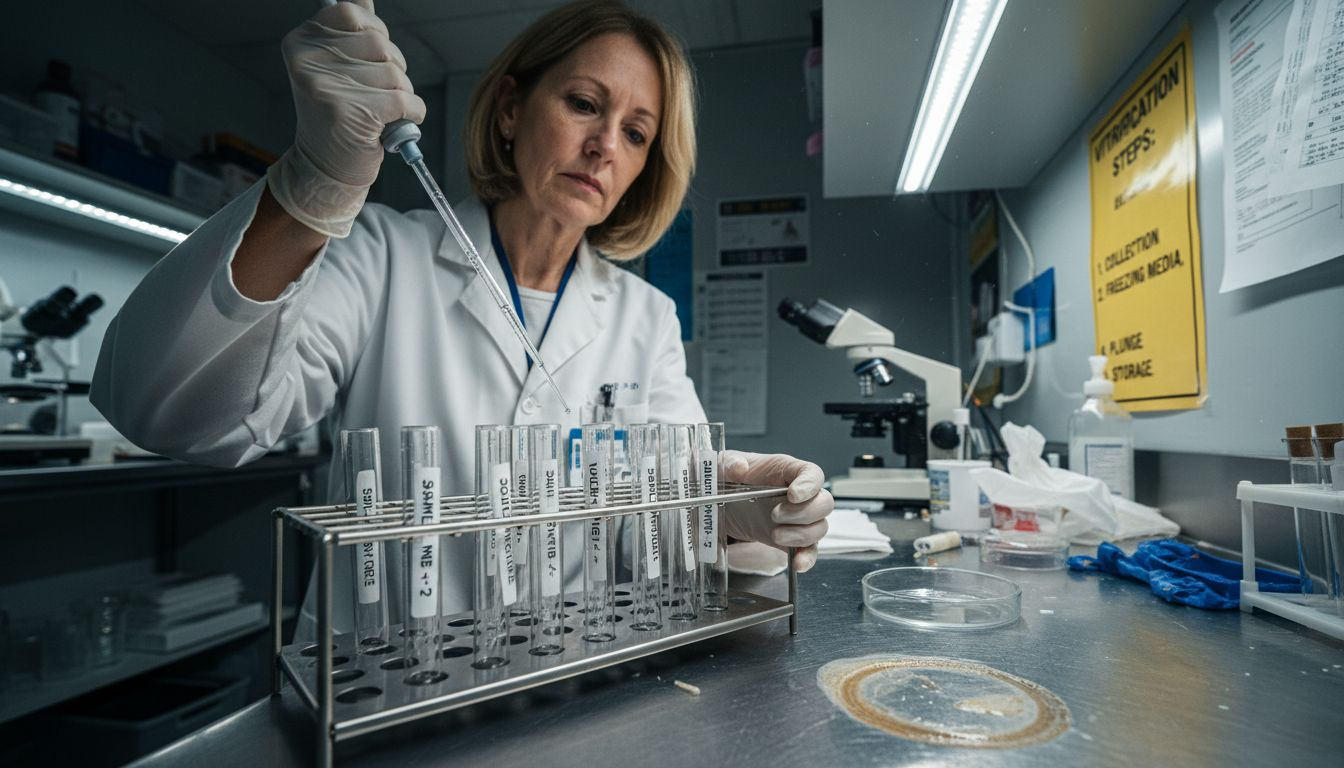
Here’s a side-by-side comparison of embryo freezing techniques to highlight their distinctive features:
Method | Freezing Speed | Risk of Ice Damage | Standard Use Cases |
Slow Freezing | Gradual (hours) | Moderate | Earlier protocols, some clinics |
Vitrification | Ultra-rapid (seconds) | Minimal | Most contemporary fertility treatments |
Controlled-Rate Freezing | Precisely managed | Low to moderate | Specialized embryo preservation |
Embryo freezing technologies continue evolving, providing increasingly reliable pathways to future parenthood.
Unlike egg freezing, embryo freezing requires genetic material from both partners or includes donor sperm. This approach offers several strategic advantages:
Allows comprehensive genetic testing before freezing
Provides higher potential pregnancy success rates
Enables precise screening for genetic conditions
Offers more comprehensive family planning options
Patients considering embryo preservation must understand the nuanced differences between freezing techniques. While traditional slow freezing remains viable, modern vitrification represents a quantum leap in reproductive technology, offering superior embryo survival and implantation rates.
Pro tip: Consult a reproductive endocrinologist to determine which embryo freezing technique best matches your specific fertility goals and medical history.
The Step-By-Step Embryo Freezing Process
Embryo freezing is a meticulously planned medical procedure that transforms reproductive possibilities for individuals seeking fertility preservation. Comprehensive embryo freezing protocols involve a series of precise, carefully orchestrated stages designed to maximize future reproductive potential.
The embryo freezing process unfolds through several critical stages:
Hormonal Stimulation
Administered fertility medications
Triggers multiple egg production
Carefully monitored hormonal response
Egg Retrieval
Minor outpatient surgical procedure
Performed under light sedation
Ultrasound-guided egg collection
Fertilization and Embryo Development
Eggs combined with sperm in laboratory
Embryos cultured for 5-7 days
Highest quality embryos selected
Precision and expertise define each stage of the embryo freezing journey.
The most advanced contemporary techniques focus on vitrification, an ultra-rapid freezing method that minimizes cellular damage. This approach dramatically improves embryo survival rates and maintains genetic integrity during long-term storage.
Key considerations during embryo selection include:
Morphological quality of embryos
Genetic screening results
Developmental stage and cellular characteristics
Potential for successful future implantation
Liquid nitrogen storage ensures embryos remain viable for extended periods, potentially decades, offering patients unprecedented flexibility in family planning strategies.
Pro tip: Request a comprehensive genetic screening during embryo selection to maximize future reproductive success and minimize potential genetic complications.
Benefits and Common Reasons for Embryo Freezing
Embryo freezing offers individuals unprecedented reproductive flexibility, providing hope and opportunity for those facing complex fertility challenges. Professional fertility organizations recommend this advanced medical technique as a strategic approach to preserving future parenthood potential.
Common reasons for choosing embryo freezing include:
Protecting fertility before medical treatments
Delaying parenthood for personal or professional reasons
Managing complex reproductive health conditions
Reducing risks during fertility treatments
Enabling comprehensive genetic screening
Specifically, patients might pursue embryo freezing when confronting:
Cancer treatments that potentially compromise fertility
Hormone therapies with reproductive side effects
Gender affirmation surgical procedures
Advanced maternal age concerns
Complex reproductive health challenges
Embryo freezing transforms medical uncertainty into reproductive possibility.
The medical benefits extend far beyond simple preservation. Genetic screening during embryo freezing allows identification of potential inherited conditions, providing patients with critical insights into their reproductive health and future family planning strategies.
Additional strategic advantages of embryo freezing include:
Minimizing ovarian hyperstimulation risks
Optimizing hormone level management
Creating multiple potential pregnancy opportunities
Providing emotional and medical peace of mind
Modern reproductive medicine views embryo freezing not just as a medical procedure, but as a powerful tool for personal reproductive autonomy and family planning.
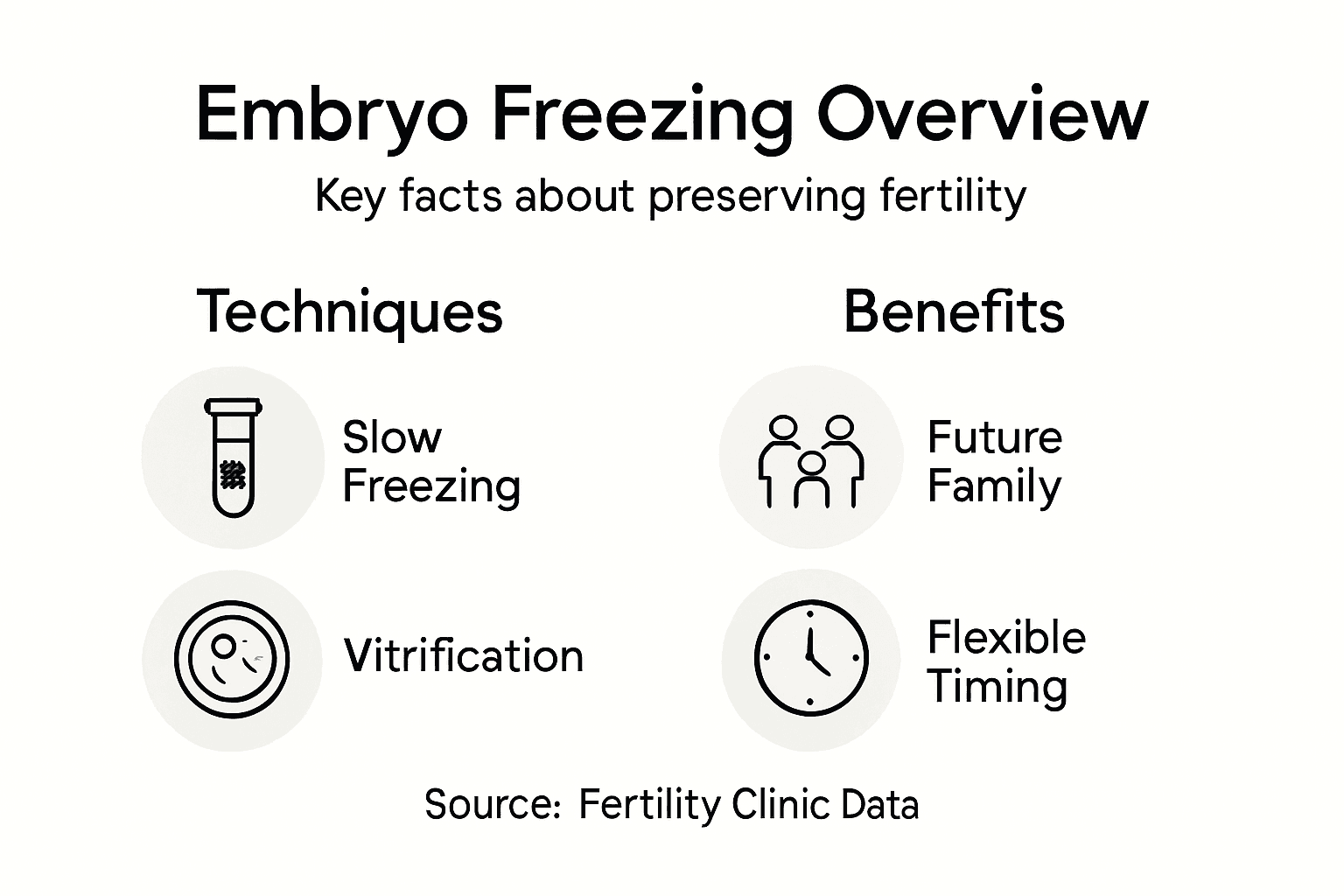
Pro tip: Consult a reproductive specialist early to understand how embryo freezing can be tailored to your unique medical and personal circumstances.
Risks, Success Rates, and Cost Factors
Embryo freezing involves complex medical and financial considerations that patients must carefully evaluate. Fertility specialists highlight critical factors including potential risks, success probabilities, and comprehensive financial implications.
Key statistical insights for embryo freezing include:
Overall embryo survival rate: 66%
Pregnancy rates per transfer: 22.5%
Success variability depends on:
Embryo quality
Freezing methodology
Individual patient health factors
Potential risks associated with embryo freezing encompass:
Cellular damage during freezing/thawing processes
Potential delays in medical treatments
Hormonal health complications
Reduced embryo viability
Psychological and emotional challenges
Comprehensive understanding mitigates potential reproductive uncertainties.
Financial considerations vary widely, influenced by multiple factors:
Number of embryos stored
Duration of storage
Additional genetic screening procedures
Medication costs
Potential insurance coverage limitations
Cost ranges typically include:
Below is a summary of the key cost factors and success rates to help with financial and medical planning:
Factor | Typical Range | Impact on Outcome |
Initial Procedure Cost | $5,000–$15,000 | Access to advanced care |
Annual Storage Fees | $300–$1,000 per year | Prolongs storage options |
Embryo Survival Rate | Around 66% | Determines usable embryos |
Pregnancy Rate per Transfer | Approx. 22.5% | Influences family-building |
Genetic Testing (optional) | $1,500–$5,000 | Screens for inherited risks |
Initial freezing procedure: $5,000 - $15,000
Annual storage fees: $300 - $1,000
Genetic testing: $1,500 - $5,000
Patients must also consider ethical and personal dimensions beyond pure medical statistics. Medical counseling provides crucial guidance in navigating these complex reproductive decisions.
Pro tip: Request a comprehensive financial breakdown and explore potential insurance coverage options before committing to embryo freezing procedures.
Take Control of Your Fertility Future with Expert Embryo Freezing Support
Embryo freezing offers a powerful way to preserve your fertility and transform uncertainty into hope. Whether you are delaying parenthood due to personal goals or facing medical treatments that impact reproductive health, understanding advanced options like vitrification and comprehensive genetic screening is crucial. At Rejuvenating Fertility Center, we specialize in personalized fertility preservation strategies that align with your unique journey and reproductive goals.
Discover how our innovative approaches, including IVF with your own or donor eggs and tailored hormone therapies, can enhance your embryo freezing success rates. Take the first step toward safeguarding your future family today by exploring expert care and compassionate support at Rejuvenating Fertility Center. Learn more about our fertility solutions and schedule a consultation to create your personalized plan now.
Frequently Asked Questions
What is embryo freezing and how does it work?
Embryo freezing is a medical technique that allows individuals to store fertilized eggs for future use. The process involves hormone stimulation for egg production, egg retrieval, fertilization in a lab, embryo culture, and then strategically freezing the embryos using advanced vitrification techniques to minimize cellular damage.
What are the benefits of embryo freezing?
Embryo freezing provides several advantages, including the ability to delay parenthood for personal or professional reasons, preserve fertility before medical treatments like chemotherapy, manage genetic health issues, and allow for additional options during IVF treatments. It also enables genetic screening of embryos to reduce the risk of inherited conditions.
What are the different types of embryo freezing techniques?
The main types of embryo freezing techniques include traditional slow freezing, modern vitrification, and controlled-rate freezing. Vitrification has become the most advanced method, offering a rapid freezing process that minimizes ice crystal formation and maintains embryo viability with higher success rates compared to slow freezing methods.
What are the risks and success rates associated with embryo freezing?
Embryo freezing has an overall survival rate of about 66% and a pregnancy rate of approximately 22.5% per transfer. Risks can include cellular damage during freezing and thawing, potential hormonal health complications, and emotional challenges. It is important to consult with a fertility specialist to understand these factors fully.
Recommended

