7-Step Fertility Checklist for Couples Seeking Parenthood
Updated: Mar 18

Trying to start or grow your family can feel overwhelming when the path to pregnancy is not as straightforward as expected. Questions about your health, timing, and next steps can leave you searching for clear, reliable answers. The right guidance makes a real difference—experts recommend beginning with a thorough, individualized fertility evaluation to uncover potential roadblocks and find solutions tailored to your unique needs.
This list breaks down the most effective steps you can take to understand and address fertility challenges. You will discover practical ways to take charge of your reproductive health, from specialist assessments and hormone insights to key lifestyle shifts and the latest testing advances. Get ready for strategies that put you in control and offer new hope at every stage of your fertility journey.
Table of Contents
Quick Summary
Takeaway | Explanation |
1. Evaluate reproductive health with a specialist | A specialist assessment lays the groundwork for understanding fertility challenges and developing treatment plans. Early evaluation can enhance conception success rates. |
2. Understand hormone levels for fertility | Hormonal assessments provide critical insights into ovarian reserve and reproductive function, allowing for personalized fertility strategies and timing for conception. |
3. Optimize lifestyle factors impacting fertility | Lifestyle choices, including nutrition and stress management, can significantly enhance fertility. Implementing healthy habits supports reproductive health effectively. |
4. Explore advanced testing options | Advanced fertility testing uncovers detailed reproductive insights, enabling couples to make informed decisions about their fertility journey and potential interventions. |
5. Create emotional support throughout the journey | Maintaining open communication and emotional connection between partners is vital to navigate the stresses of fertility treatments effectively. |
1. Evaluate Reproductive Health With a Specialist First
Understanding your reproductive health is the critical first step in any fertility journey. A comprehensive specialist evaluation provides the foundational roadmap for achieving pregnancy by identifying potential challenges early and developing targeted treatment strategies.
Reproductive specialists conduct a systematic assessment that goes far beyond simple assumptions about fertility. They investigate complex reproductive factors through a detailed diagnostic process that includes:
Comprehensive medical history review for both partners
Physical examinations targeting reproductive systems
Advanced hormonal and genetic screening
Specialized fertility diagnostic tests
Evaluation of potential underlying health conditions
For couples over 35 or experiencing known fertility challenges, specialist evaluation becomes even more crucial. The assessment typically involves multiple stages designed to pinpoint exact reproductive health status and potential intervention requirements.
Early specialist involvement can dramatically improve chances of successful conception by identifying and addressing fertility barriers proactively.
Most fertility specialists recommend an initial consultation within 12 months of attempting pregnancy (or six months for women over 35). During this consultation, expect a thorough discussion of your medical background, lifestyle factors, and potential genetic considerations that might impact fertility.
Key diagnostic elements include:
Detailed reproductive history
Hormone level assessments
Ovulation function tests
Sperm analysis
Structural reproductive system evaluation
Pro tip: Arrive at your first specialist consultation with a complete medical history, including previous pregnancies, menstrual cycle details, and any relevant family fertility background.
2. Understand Hormone Levels and Ovarian Reserve
Knowing your hormonal landscape is essential for understanding fertility potential and overall reproductive health. Hormone levels provide critical insights into your body’s reproductive functioning and potential challenges.
Fertility experts recommend comprehensive hormone testing to evaluate ovarian reserve and function. These tests measure multiple critical hormones that paint a comprehensive picture of reproductive potential:
Follicle Stimulating Hormone (FSH): Indicates ovarian response
Luteinizing Hormone (LH): Tracks ovulation patterns
Estradiol: Assesses estrogen levels
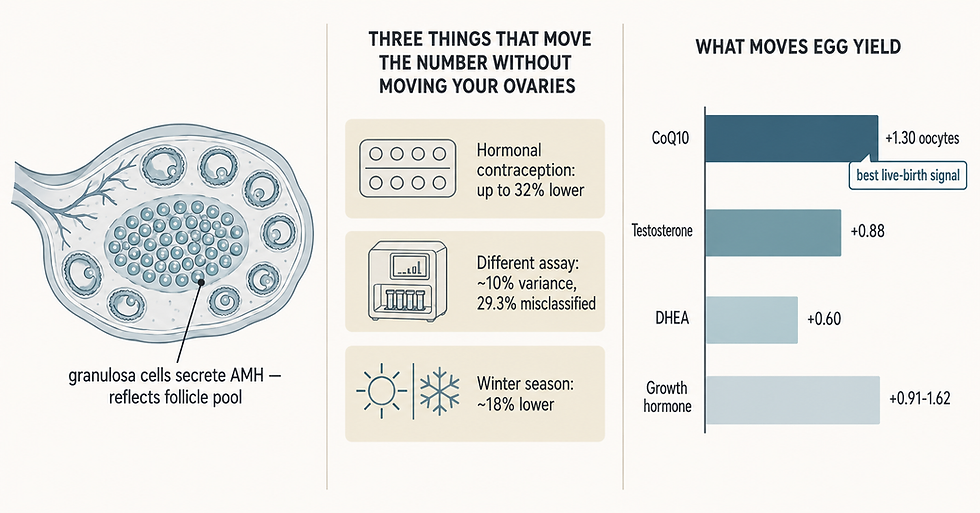
Anti-Müllerian Hormone (AMH): Measures remaining egg quantity
Prolactin: Checks potential reproductive system disruptions
Anti-Müllerian hormone stands out as a particularly powerful indicator of reproductive potential. This hormone directly correlates with the number of eggs remaining in your ovaries, providing a quantitative assessment of fertility.
Understanding your hormonal profile allows for personalized fertility planning and targeted interventions.
Women approaching their mid-30s should pay special attention to hormone testing. Declining ovarian reserve can significantly impact fertility, making early assessment crucial for developing proactive reproductive strategies.
Key insights from hormone testing include:
Potential fertility challenges
Optimal conception timing
Recommended treatment approaches
Individualized reproductive health planning
Pro tip: Schedule comprehensive hormone testing with a reproductive specialist who can provide nuanced interpretation of your results and personalized recommendations.
3. Review Lifestyle Factors That Impact Fertility
Your daily habits and lifestyle choices play a profound role in fertility potential. Scientific research reveals that seemingly small decisions can significantly influence your reproductive health and chances of conception.
Researchers have comprehensively documented how lifestyle behaviors affect reproductive outcomes. Key factors that directly impact fertility include:
Body Weight Management
Maintaining healthy body mass index (BMI)
Avoiding extreme weight fluctuations
Nutritional Intake
Consuming balanced whole food diet
Incorporating fertility-supporting nutrients
Substance Use
Complete smoking cessation
Reducing alcohol consumption
Stress Reduction
Regular stress management techniques
Prioritizing mental health
Nutrition plays a critical role in reproductive health. Women and men should focus on consuming whole foods rich in antioxidants proteins and essential minerals. Specific dietary recommendations include increasing intake of leafy greens omega-3 fatty acids and minimizing processed food consumption.
Comprehensive lifestyle modifications can dramatically improve fertility potential across diverse populations.
Physical activity also contributes significantly to reproductive health. Moderate exercise helps regulate hormones improve metabolic function and reduce stress. However excessive high-intensity workouts might negatively impact fertility particularly for women.
Stress management emerges as another crucial factor. Chronic stress can disrupt hormonal balance and potentially interfere with ovulation and sperm production. Implementing mindfulness practices yoga and regular relaxation techniques can help mitigate these effects.
Practical lifestyle optimization strategies:
Create balanced nutrition plan
Establish consistent sleep schedule
Practice regular stress reduction
Limit caffeine and alcohol intake
Maintain healthy body weight
Pro tip: Consider consulting a fertility-specialized nutritionist who can develop a personalized dietary plan tailored to your specific reproductive health needs and goals.
4. Explore Advanced Fertility Testing Options
Advanced fertility testing offers unprecedented insights into reproductive potential beyond traditional diagnostic methods. These sophisticated evaluations provide couples with comprehensive understanding of their unique fertility landscape.
Fertility specialists recommend comprehensive diagnostic screening strategies that go well beyond basic hormonal assessments. The advanced testing spectrum includes:
Genetic Screening
Chromosomal abnormality detection
Inherited disorder identification
Carrier status evaluation
Reproductive Immunology Tests
Immune system compatibility assessment
Inflammation marker identification
Autoimmune factor screening
Specialized Hormone Panels
Comprehensive endocrine system evaluation
Detailed reproductive hormone mapping
Stress and metabolic hormone assessment
Genetic testing represents a groundbreaking advancement in fertility diagnostics. By identifying potential genetic challenges early genetic screenings can help couples make informed reproductive decisions and develop targeted intervention strategies.
Advanced fertility testing transforms uncertainty into actionable medical intelligence.
Male fertility evaluations have also evolved dramatically. Modern techniques like testicular biopsy can provide intricate details about sperm production quality and potential underlying issues that traditional semen analysis might miss.
Endometrial receptivity assays offer another critical diagnostic tool. These specialized tests assess the uterine environment’s readiness for embryo implantation providing crucial information for couples considering assisted reproductive technologies.
Key advanced testing benefits:
Personalized fertility insights
Early problem identification
Targeted treatment planning
Reduced reproductive uncertainty
Enhanced conception strategies
Pro tip: Request a comprehensive consultation with a reproductive specialist who can customize advanced testing recommendations specific to your individual reproductive health profile.
5. Consider Fertility Preservation Methods Early
Fertility preservation represents a strategic approach to safeguarding reproductive potential in an era of increasing professional and personal complexity. Understanding and implementing preservation techniques can provide significant long term reproductive flexibility.
Modern reproductive medicine offers multiple egg freezing and preservation options for individuals seeking to protect their future fertility:
Egg Freezing
Preserves unfertilized eggs at current reproductive health stage
Maintains genetic material for future conception
Provides reproductive autonomy
Embryo Cryopreservation
Stores fertilized eggs for future implantation
Higher successful pregnancy rates
Preferred for partnered individuals
Ovarian Tissue Preservation
Surgical preservation of ovarian tissue
Emerging technology with promising results
Beneficial for medical treatment patients
Age plays a critical role in fertility preservation. Women experience significant reproductive decline after age 35 making early preservation strategies increasingly important. Biological clock constraints mean proactively protecting reproductive potential becomes a strategic life decision.
Fertility preservation is not about delaying parenthood but expanding reproductive choices.
Technological advancements have dramatically improved preservation success rates. Modern cryopreservation techniques enable eggs and embryos to remain viable for extended periods with minimal genetic degradation.
Financial considerations remain an important factor. Many insurance plans now offer partial coverage for fertility preservation procedures especially for individuals facing medical treatments that might compromise reproductive capabilities.
Preservation strategy considerations:
Individual health status
Current relationship circumstances
Long term reproductive goals
Financial resources
Personal timeline preferences
Pro tip: Schedule a comprehensive fertility assessment before 35 to understand your unique preservation options and develop a personalized reproductive strategy.
6. Discuss Treatment Options Like IVF or Egg Donation
Navigating fertility treatments requires comprehensive understanding and thoughtful consideration of available reproductive technologies. Exploring options like in vitro fertilization (IVF) and egg donation can open pathways to parenthood for couples experiencing reproductive challenges.
Reproductive specialists recommend exploring multiple fertility treatment approaches based on individual medical profiles:
Conventional IVF
Using partner’s eggs and sperm
Multiple embryo creation and selection
Highest success rates for younger patients
Donor Egg IVF
Utilizes donor eggs for conception
Ideal for diminished ovarian reserve
Higher pregnancy success rates
Gestational Surrogacy
Alternative when pregnancy carrying is challenging
Uses intended parents’ or donor embryos
Comprehensive legal and medical coordination
Genetic screening becomes crucial during these advanced reproductive treatments. Modern techniques allow comprehensive chromosomal assessment to minimize potential genetic complications and increase successful pregnancy probability.
Treatment selection is a deeply personal journey requiring medical expertise and emotional readiness.
Egg donation emerges as a powerful option for individuals with persistent fertility challenges. Donors undergo extensive medical and psychological screening to ensure highest quality genetic material and emotional preparedness.
Financial considerations play a significant role in treatment selection. Many insurance plans now offer partial coverage for advanced reproductive technologies though out of pocket expenses can remain substantial.
Key treatment evaluation factors:
Medical diagnosis specifics
Age and reproductive health
Financial resources
Emotional readiness
Personal reproductive goals
Pro tip: Consult multiple reproductive specialists and request comprehensive treatment comparisons to develop a personalized fertility strategy that aligns with your specific medical profile and family building objectives.
7. Create an Emotional and Supportive Partnership
The fertility journey challenges even the strongest relationships. Understanding and nurturing emotional connection becomes critical when navigating complex reproductive challenges together.
Researchers emphasize the importance of psychosocial support during fertility treatments. Successful partnerships require intentional communication and mutual emotional investment:
Emotional Vulnerability
Share genuine feelings openly
Validate partner’s experiences
Practice active listening
Shared Decision Making
Collaborative treatment planning
Equal voice in medical choices
Regular check in conversations
Stress Management
Develop collective coping strategies
Attend medical appointments together
Schedule regular emotional check ins
Communication represents the foundation of fertility journey resilience. Partners must create safe spaces for expressing fears frustrations and hopes without judgment.
Emotional synchronization transforms challenges into opportunities for deeper connection.
Professional counseling can provide structured support. Many fertility clinics offer specialized relationship therapy designed specifically for couples experiencing reproductive challenges.
Mental and emotional preparation proves as important as medical interventions. Understanding that fertility treatments create complex emotional landscapes helps couples navigate potential stress points proactively.
Relationship strengthening strategies:
Practice radical empathy
Maintain individual self care
Set realistic expectations
Celebrate small victories
Support each other unconditionally
Pro tip: Schedule monthly relationship check ins focused exclusively on processing your fertility journey emotions and maintaining intimate connection beyond medical challenges.
Below is a comprehensive table summarizing the strategies and recommendations for managing reproductive health and fertility discussed in the article.
Topic | Key Details | Recommendations |
Evaluate Reproductive Health | Conduct a detailed assessment involving medical history, physical exams, and specialized tests. | Seek specialist consultation within 12 months of trying to conceive (6 months for women over 35). |
Understand Hormone Levels | Comprehensive hormone testing including FSH, LH, AMH, Prolactin, and Estradiol. | Schedule testing to determine fertility potential and plan personalized interventions. |
Address Lifestyle Factors | Balance nutrition, manage stress, and regulate body weight for optimal fertility. | Consult specialists for personalized lifestyle plans to support reproductive health. |
Explore Advanced Testing | Utilize genetic, immunology, and specialized diagnostic tests for enhanced insights. | Request tailored testing based on medical profiles for precise fertility strategies. |
Consider Fertility Preservation | Procedures include egg freezing, embryo cryopreservation, and ovarian tissue preservation. | Conduct fertility preservation planning before age 35 for optimal outcomes. |
Treatment Options | Includes IVF, donor egg use, and surrogacy based on individual needs. | Evaluate options collaboratively with specialists. |
Emotional Support | Develop mutual communication and stress management strategies as a couple. | Engage in counseling and maintain emotional synchronization. |
Take Control of Your Fertility Journey Today
Facing fertility challenges can feel overwhelming but you are not alone. The “7-Step Fertility Checklist for Couples Seeking Parenthood” highlights crucial steps like hormone evaluation, lifestyle adjustments, advanced testing, and emotional support that are essential for successful conception. If you are concerned about reproductive health, diminished ovarian reserve, or exploring options like egg freezing and IVF, understanding your personal fertility picture is the first step.
At Rejuvenating Fertility Center, we specialize in personalized fertility solutions that align with your unique needs. From cutting-edge treatments such as ovarian rejuvenation and regenerative therapies to compassionate care supporting your emotional well-being we provide a comprehensive approach to help you overcome fertility barriers. Don’t wait until time slips away. Visit Rejuvenating Fertility Center today to schedule a consultation and start your tailored fertility assessment. Discover how our innovative therapies and expert team led by Dr. Zaher Merhi can turn your parenthood hopes into reality.
Frequently Asked Questions
What should we discuss during our initial consultation with a fertility specialist?
Start by sharing your complete medical histories, including any previous pregnancies, menstrual cycle details, and relevant family fertility backgrounds. Prepare to discuss lifestyle factors and any known health issues that may affect your fertility journey.
How can we better understand hormone levels and their impact on fertility?
Knowing your hormonal landscape is essential for assessing reproductive health. Schedule a comprehensive hormone testing appointment to evaluate key hormones like Follicle Stimulating Hormone (FSH) and Anti-Müllerian Hormone (AMH) that indicate ovarian function and reserve.
What lifestyle changes can we implement to improve our chances of conception?
Focus on maintaining a healthy body weight, eating a balanced diet rich in whole foods, and reducing substance use like smoking and alcohol. Prioritize stress management techniques and moderate exercise to support overall reproductive health.
What advanced fertility testing options should we consider?
Explore genetic screening, reproductive immunology tests, and specialized hormone panels to gain deeper insights into your fertility potential. Consult a reproductive specialist to determine which advanced tests are most relevant for your specific situation.
How do we decide between different fertility treatment options, like IVF or egg donation?
Evaluate your individual medical diagnoses and overall reproductive health to understand which treatment option is most suitable. Discuss the benefits and success rates associated with each method, such as conventional IVF or donor egg IVF, during consultations with your fertility specialist.
How can we support each other emotionally throughout the fertility journey?
Fostering open communication about feelings and experiences is crucial. Schedule regular check-ins to discuss emotional wellbeing, validate each other’s experiences, and collaborate on coping strategies to navigate the challenges of the fertility process together.
Recommended