
Why egg freezing matters for women over 35 in 2026
Updated: Mar 18

Fertility rates drop by 50% after age 35, creating urgency for women considering family planning options. Egg freezing offers a scientifically proven method to preserve reproductive potential before biological aging compromises egg quality. This guide explains the biological mechanisms behind fertility decline, how egg freezing works, success rates for different age groups, and critical timing considerations. You’ll discover what egg freezing can and cannot deliver, special considerations for diminished ovarian reserve, and how to make informed decisions about your fertility future.
Table of Contents
Understanding The Biological Basis Of Fertility Decline After 35
How Egg Freezing Preserves Fertility: Mechanisms And Process
Egg Freezing For Women With Diminished Ovarian Reserve And Low Egg Quality
When To Consider Egg Freezing: Timing And Decision Framework
Bridging Understanding To Action: Personalized Fertility Preservation Planning
Explore Personalized Fertility Solutions At Rejuvenating Fertility Center
Key takeaways
Point | Details |
Fertility decline accelerates after 35 | Egg quality and quantity decrease sharply, reducing natural conception rates and increasing chromosomal abnormalities. |
Egg freezing halts biological aging | Cryopreservation preserves eggs at their current quality, preventing further degradation from maternal age. |
Success depends on timing and reserve | Freezing before 35 yields higher outcomes; diminished ovarian reserve reduces but doesn’t eliminate benefit. |
Common myths mislead decisions | Egg freezing improves chances but doesn’t guarantee pregnancy; timing and age at freezing critically affect results. |
Personalized assessment guides choices | Ovarian reserve testing and specialist consultation determine optimal timing and realistic expectations. |
Understanding the biological basis of fertility decline after 35
Your reproductive system undergoes dramatic changes as you age. Women’s fertility declines significantly after age 35 due to reduced egg quality and quantity linked to ovarian aging. This isn’t just about having fewer eggs available.
The eggs you’re born with age alongside you. By 35, many eggs contain chromosomal errors that prevent successful fertilization or healthy embryo development. These abnormalities increase exponentially, explaining why miscarriage rates triple between ages 30 and 40.
Ovarian reserve, the pool of viable eggs remaining in your ovaries, also depletes faster after 35. While you start life with about one million eggs, only 25,000 remain by age 37. This dual challenge of quality and quantity creates fertility obstacles that surprise many women.
Key biological factors driving decline after 35 include:
Increased aneuploidy (abnormal chromosome numbers) in eggs
Mitochondrial dysfunction reducing egg energy production
Cumulative oxidative stress damaging cellular components
Declining hormone responsiveness affecting egg maturation
Accelerated follicle depletion exhausting egg reserves
Understanding these mechanisms helps you appreciate why timing matters enormously for fertility preservation strategies.
How egg freezing preserves fertility: mechanisms and process
Egg freezing preserves fertility by preventing the degradation of egg quality that occurs with advancing maternal age. The technology essentially stops time for your reproductive cells, maintaining them at their current biological age indefinitely.
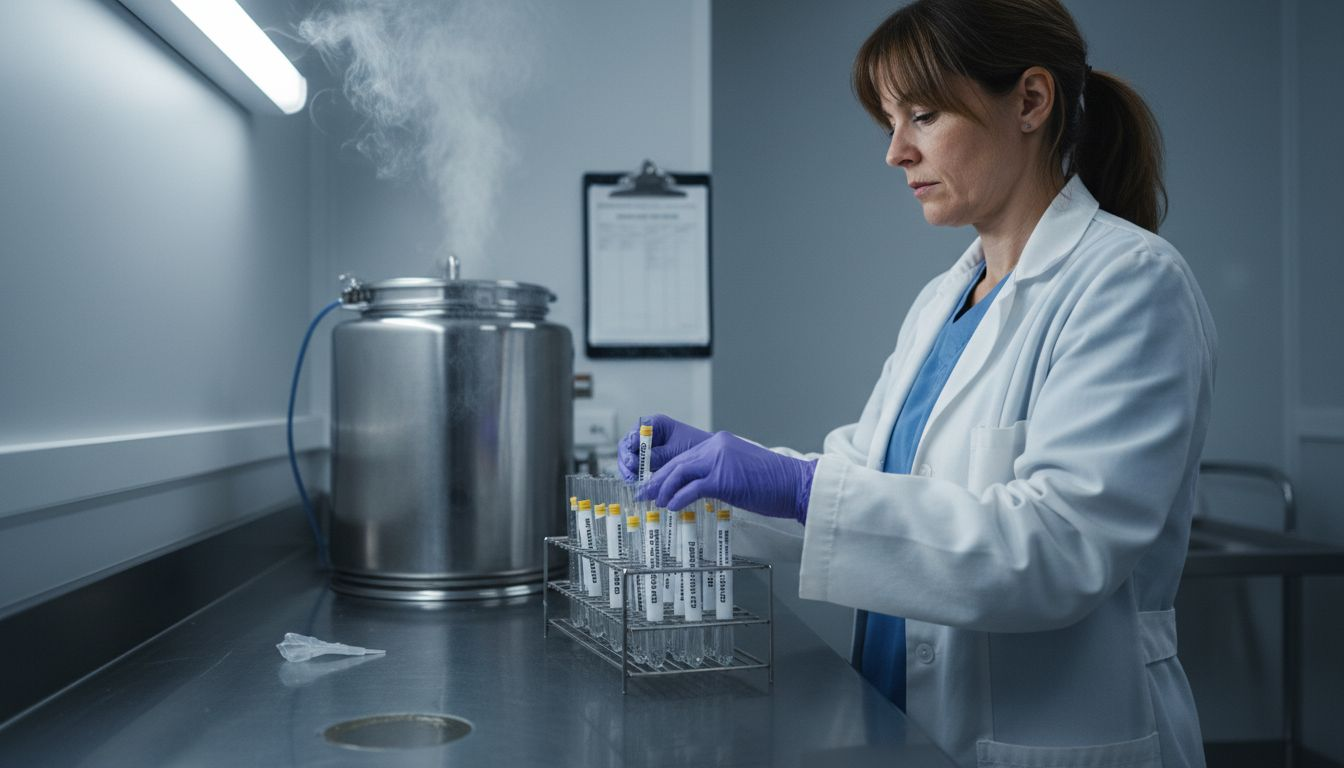
Modern vitrification (flash freezing) transforms eggs into a glass-like state within seconds. This ultra-rapid cooling prevents ice crystal formation that would damage delicate cellular structures. When thawed years later, eggs retain the same quality characteristics they had at freezing.
The egg freezing process unfolds in carefully orchestrated stages:
Ovarian stimulation with hormone injections for 10 to 14 days to mature multiple eggs simultaneously
Monitoring through blood tests and ultrasounds to track follicle development and prevent complications
Trigger shot administration when follicles reach optimal size to finalize egg maturation
Egg retrieval procedure under light sedation using ultrasound-guided needle aspiration
Laboratory vitrification within hours of retrieval to preserve eggs at peak quality
Secure storage in liquid nitrogen tanks at negative 196 degrees Celsius
Success rates prove impressive when eggs are frozen young. Studies show 90% survival rates for vitrified eggs, with fertilization rates matching fresh eggs from the same age group.
Pro Tip: Freezing at least 15 to 20 mature eggs before age 35 gives you the best statistical chance of future pregnancy success, as not all eggs survive thawing, fertilize, or develop into viable embryos.
Egg freezing for women with diminished ovarian reserve and low egg quality
Diminished ovarian reserve presents unique challenges that affect egg freezing outcomes. Women with DOR typically retrieve fewer eggs per cycle, requiring multiple stimulation rounds to build an adequate reserve. This reality doesn’t eliminate egg freezing as an option but demands realistic expectations.
Live birth rates after using frozen eggs decrease when ovarian reserve is already compromised at freezing. However, preserving whatever eggs remain still offers better prospects than waiting as reserve continues declining. The key lies in personalized assessment before proceeding.
Emerging therapies offer hope for improving outcomes:
Platelet-rich plasma (PRP) ovarian injections to potentially awaken dormant follicles
Growth hormone supplementation during stimulation to improve egg quality
Antioxidant protocols reducing oxidative stress affecting egg health
DHEA supplementation potentially improving ovarian response in some women
Mitochondrial support therapies targeting cellular energy production
Ovarian rejuvenation therapies combined with egg freezing show promise according to stem cell research to improve outcomes for women with low egg quality or diminished ovarian reserve. These cutting-edge approaches remain investigational but offer additional options worth discussing with specialists.
Pro Tip: Request anti-Müllerian hormone (AMH) and antral follicle count (AFC) testing before deciding on egg freezing if you suspect diminished reserve; these markers predict stimulation response and help set realistic expectations.
Common misconceptions about egg freezing
Misunderstandings about egg freezing capabilities lead many women toward unrealistic expectations or delayed action. The most damaging myth suggests egg freezing guarantees future pregnancy. Reality proves more nuanced.
Egg freezing is not a guaranteed pregnancy solution; timing and age significantly impact success rates according to reproductive medicine experts. A 38-year-old freezing eggs faces dramatically lower success odds than a 32-year-old, even with the same number of frozen eggs.
Other prevalent misconceptions include:
Believing you can freeze eggs effectively at any age without success rate penalties
Assuming one egg freezing cycle provides sufficient eggs for multiple children
Thinking egg freezing prevents or reverses ovarian aging in your body
Expecting frozen eggs to perform better than fresh eggs from the same age
Fearing the procedure carries high risks comparable to major surgery
The safety myth deserves special attention. While all medical procedures involve some risk, egg freezing complications remain rare under proper medical supervision. Ovarian hyperstimulation syndrome affects fewer than 3% of cycles, and serious events occur even less frequently.
Understanding these realities helps you make informed decisions without false confidence or unnecessary fear clouding your judgment.
When to consider egg freezing: timing and decision framework
Timing determines egg freezing success more than almost any other factor. The ideal window for freezing eggs falls between ages 30 and 34, when egg quality remains high but fertility awareness increases. Freezing before 35 maximizes both egg quality and quantity retrieved.
After 38, success rates decline steeply. Each year of delay reduces the chance that frozen eggs will result in live birth. This doesn’t make freezing pointless after 38, but it requires honest conversations about expected outcomes versus costs.
Use this framework to evaluate your personal timing:
Assess current relationship status and family building timeline uncertainty
Evaluate ovarian reserve through AMH testing and antral follicle counts
Consider family history of early menopause or fertility challenges
Review financial resources for freezing and potential future IVF cycles
Factor in career, education, or personal goals affecting family timing
Consult specialists to understand your specific biological situation
Age at Freezing | Eggs Needed for 70% Live Birth Chance | Average Eggs Retrieved Per Cycle |
Under 35 | 8 to 10 | 10 to 15 |
35 to 37 | 10 to 15 | 8 to 12 |
38 to 40 | 20 to 25 | 6 to 10 |
Over 40 | 30 plus | 3 to 6 |
Pro Tip: If you’re approaching 35 and uncertain about family timing within the next three years, schedule a fertility assessment now rather than waiting; knowing your reserve status enables better decisions than age alone.
For detailed guidance on optimal timing, explore egg freezing fertility preservation strategies specific to women over 35.
Comparing egg freezing and donor egg options
Choosing between freezing your own eggs and planning to use donor eggs later involves medical, emotional, and practical considerations. Each path offers distinct advantages depending on your circumstances and priorities.
Frozen own eggs maintain your genetic connection to future children but success varies dramatically by freezing age. A 36-year-old’s frozen eggs might yield a 30% pregnancy rate per embryo transfer, while donor eggs from a 25-year-old donor typically achieve 60% to 70% success rates.
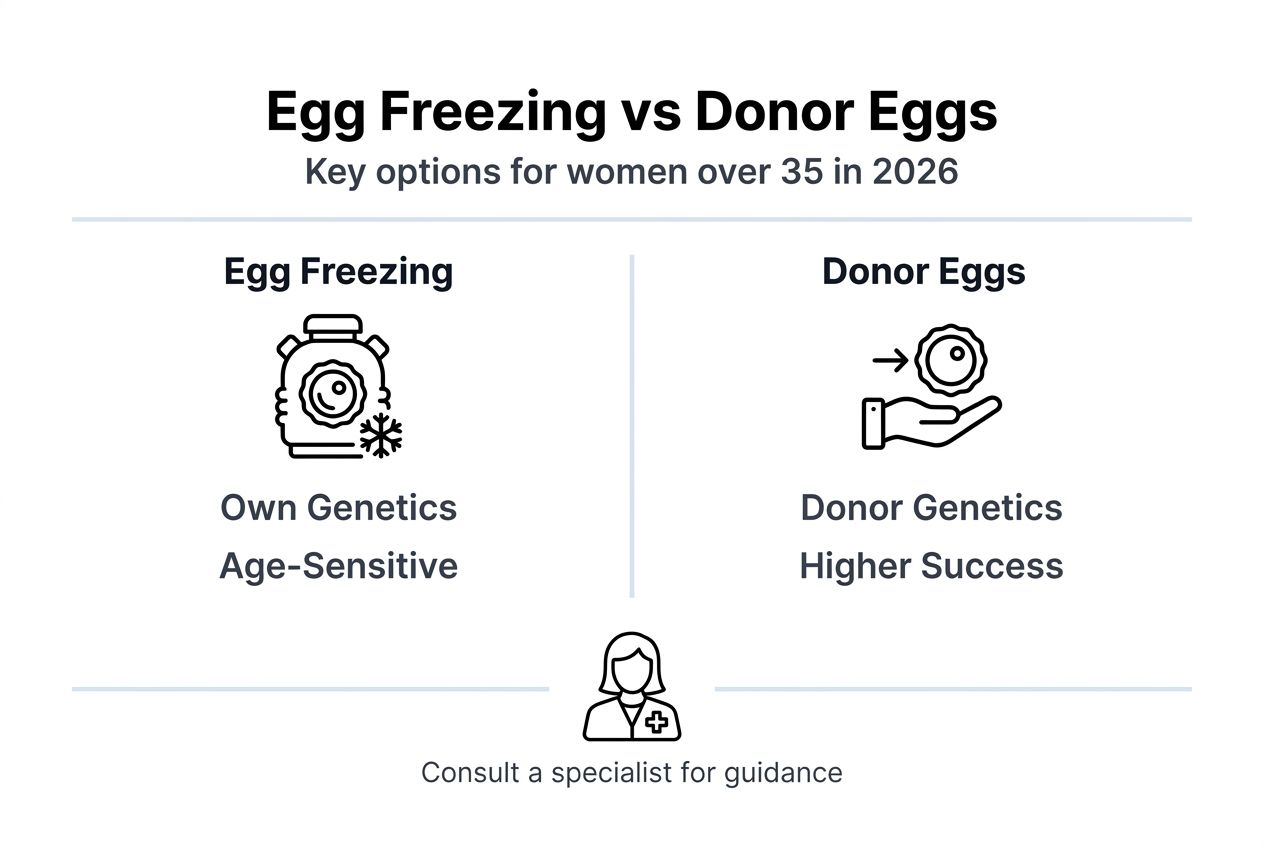
Factor | Frozen Own Eggs | Donor Eggs |
Genetic Link | Yes, full genetic parentage | No genetic connection |
Success Rate | Varies by age at freezing (20% to 50% per transfer) | Consistently high (60% to 70% per transfer) |
Timing Flexibility | Use anytime after freezing | Available when needed |
Emotional Impact | Genetic continuity, potential disappointment if unsuccessful | Grief over genetic loss, gratitude for opportunity |
Cost | Upfront freezing plus later IVF | No freezing cost, pay for donor cycle and IVF |
Emotional factors weigh heavily in this decision. Many women prioritize genetic connection and prefer attempting pregnancy with their own eggs first. Others recognize that donor eggs offer higher success rates and faster paths to parenthood.
Key decision points include:
Your age and ovarian reserve status affecting own egg success likelihood
Personal importance of genetic connection to your child
Financial resources for potentially multiple attempts with own eggs
Timeline urgency for achieving pregnancy
Openness to third-party reproduction and disclosure considerations
Learn more about your options at the egg freezing overview page to understand both paths thoroughly.
Safety considerations in egg freezing
Safety concerns often prevent women from pursuing egg freezing despite its benefits. Understanding actual risk profiles helps you make informed decisions without exaggerated fears.
Ovarian hyperstimulation syndrome occurs in less than 3% of egg freezing cycles; serious complications are rare. Modern protocols minimize OHSS risk through careful medication dosing and trigger shot timing.
The egg retrieval procedure itself carries minimal risk:
Bleeding at puncture sites occurs in fewer than 1% of cases
Infection rates remain below 0.5% with sterile technique
Anesthesia complications are exceptionally rare with light sedation
Ovarian damage is virtually nonexistent with experienced practitioners
Long-term fertility effects from stimulation appear negligible
Most women return to normal activities within 24 to 48 hours after retrieval. Mild cramping and bloating resolve quickly as ovaries return to normal size.
“The safety profile of egg freezing has improved dramatically with modern vitrification and refined stimulation protocols. When performed at experienced centers, the procedure presents minimal risk to reproductive health or overall wellbeing.”
Choosing an experienced fertility center dramatically affects both safety and success. Specialists who perform hundreds of cycles annually develop expertise that reduces complications and optimizes outcomes. Ask potential providers about annual case volumes, success rates by age group, and complication rates before proceeding.
Bridging understanding to action: personalized fertility preservation planning
Knowledge alone doesn’t preserve your fertility; translating understanding into personalized action does. The insights you’ve gained about biological decline, egg freezing mechanisms, and timing considerations prepare you to develop a tailored strategy.
Comprehensive fertility assessment forms the foundation of effective planning. Ovarian reserve testing through AMH levels and antral follicle counts reveals your current reproductive status. These markers predict how you’ll respond to stimulation and how many eggs you might retrieve.
Consultation with fertility specialists transforms test results into actionable plans. Expert guidance helps you:
Interpret ovarian reserve markers in context of your age and goals
Understand realistic success probabilities based on your specific situation
Decide optimal timing for egg freezing given your biological and life circumstances
Explore complementary strategies like ovarian rejuvenation if reserve is low
Develop backup plans including potential donor egg considerations
Your fertility preservation strategy should remain adaptive rather than rigid. Regular reassessment every 12 to 18 months allows you to adjust plans as circumstances or reserve status changes. This flexibility ensures you’re always making optimal decisions based on current information.
Explore tailored fertility treatment plans designed for women over 35, and learn how to start fertility treatments when you’re ready to move forward.
Explore personalized fertility solutions at Rejuvenating Fertility Center
Rejuvenating Fertility Center specializes in fertility preservation and assisted reproduction for women over 35. Our personalized approach combines cutting-edge egg freezing technology with innovative ovarian rejuvenation therapies. We understand the unique challenges you face with diminished reserve or advancing age.
Our comprehensive services support you through every stage of your IVF journey, from initial assessment through successful pregnancy. Whether you choose to freeze your own eggs, explore our three types of IVF protocols, or consider donor egg options, our team develops customized treatment plans aligned with your biological reality and personal goals.
FAQ
Is egg freezing guaranteed to result in pregnancy?
Egg freezing significantly improves your fertility prospects but does not guarantee pregnancy. Success depends on multiple factors including your age at freezing, number of eggs stored, and egg quality. Even with optimal conditions, individual results vary based on how eggs survive thawing and fertilization.
What is the best age to freeze eggs for fertility preservation?
Freezing eggs before age 35 offers the highest success rates, with the ideal window between 30 and 34. However, individual factors like ovarian reserve levels may influence optimal timing. Women with family history of early menopause or declining AMH levels might benefit from freezing earlier than peers with robust reserves.
Are there risks involved with egg freezing procedures?
Risks such as ovarian hyperstimulation syndrome are rare and manageable, affecting fewer than 3% of cycles. Other complications including bleeding, infection, or anesthesia reactions occur even less frequently. Medical supervision at experienced fertility centers ensures the procedure remains safe with minimal disruption to your health.
Can women with diminished ovarian reserve benefit from egg freezing?
Success rates may be lower but some benefit is possible, particularly when combined with ovarian rejuvenation approaches. Women with DOR often require multiple stimulation cycles to retrieve adequate egg numbers. Comprehensive assessment helps determine if egg freezing makes sense for your specific reserve level and age, or if donor eggs offer better prospects.
Recommended