top of page


Patient Questions
Honest answers to real questions patients ask about fertility treatment, costs, timelines, and what to expect.


Can You Get Pregnant During Perimenopause?
Quick answer: Yes — you can get pregnant during perimenopause, and the evidence is more encouraging than most articles suggest. Even in late perimenopause, when the majority of cycles no longer release an egg, roughly one in four cycles longer than 60 days is still ovulatory. Ovulation simply happens much later than you expect — around cycle day 27 — which is why so many women conclude they have stopped ovulating when they have not. Your reproductive stage predicts this bette
Jul 3011 min read


How to Boost AMH Level: What Actually Moves the Number, What Moves Your Odds, and How to Tell the Difference
Quick answer: Yes — there are real ways to boost your AMH level, and there is good news most articles skip entirely. Before you change anything, check that your number is real. Hormonal birth control can suppress AMH by up to a third, different labs report different values for the identical blood sample, and AMH dips in winter. Once you have a true reading, CoQ10 has the strongest live-birth evidence of any supplement studied, and regenerative options like intraovarian PRP ar
Jul 159 min read

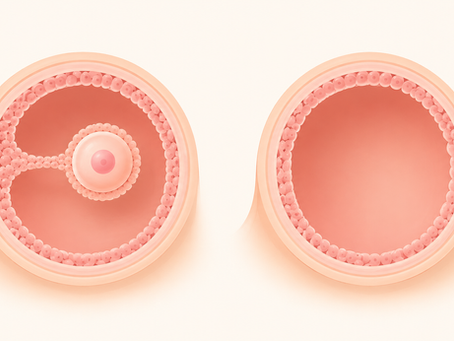
Empty Follicle Syndrome: Why No Eggs Were Retrieved — and What It Really Means
Empty follicle syndrome is when no eggs are retrieved during IVF even though the ovaries produced mature-looking follicles and normal hormone levels. It's rare — affecting well under 1% of IVF cycles — and in most cases the follicle is not truly empty. Far more often, the trigger shot's timing, dose, or absorption is the issue, which means the next cycle can turn out very differently. You did the injections. You watched the follicles grow on every scan. The count looked good.
Jul 78 min read


How to Reverse Premature Ovarian Failure Naturally
Quick answer: No supplement, diet, or "natural" protocol has been proven to reverse premature ovarian failure on its own. Hormone therapy protects your bones and heart but does not restore fertility, and about 5–10% of women conceive spontaneously after diagnosis. What the newest research does show is that regenerative treatments like intraovarian PRP and bone marrow stem cell–enriched PRP can reactivate dormant follicles and raise AMH and follicle counts in a meaningful sha
Jun 39 min read


TrumpRx IVF: Will It Actually Lower Your Medication Costs in 2026?
Table of Contents What Is TrumpRx — and Why Does It Matter for IVF Patients? Why IVF Patients Are Paying Attention to TrumpRx How TrumpRx Works for Fertility Medications What the Numbers Actually Look Like — TrumpRx IVF Drug Prices After the Hype — Who Doesn't Qualify and What's Not Covered? TrumpRx vs. Other Ways to Save on IVF Medications What to Expect — Costs, Timeline, and Next Steps Frequently Asked Questions The Bottom Line What Is TrumpRx — and Why Does It Matter for
Apr 810 min read


How to Improve Egg Quality After 40: What New Research Actually Shows
Here is the direct answer: yes, you can take meaningful steps to improve egg quality after 40. Two studies published in early 2025 confirm that your ovaries are living, metabolically active tissue — not a ticking clock with a fixed countdown. Mitochondrial function inside your eggs and the protective enzymes in the cells surrounding them respond to how you live, what you supplement, and the environment you create for follicle development. That does not mean age is irrelevant.
Apr 37 min read


Global Fertility Decline: Why It’s Not Too Late
"If only we hadn't waited so long." "If only I had frozen my eggs." "I wish I wouldn't have waited." If you have ever thought or spoken those words, you are not alone. Clinicians at Harvard Health identify these as the most common sentences patients say in fertility clinics. They come from women who built careers, waited for the right partner, and did everything society asked — only to be told their "window has closed." But here is what most of those articles and most of thos
Mar 256 min read


How to start fertility treatments after 35 with confidence
Learn how to start fertility treatments after 35 with expert guidance on testing, treatment selection, safety protocols, and realistic success expectations tailored to your needs.
Mar 711 min read


Fertility Success Rates: What They Really Mean
What do fertility success rates actually mean? How clinics measure IVF outcomes, why rates vary by age, and how to compare clinics using SART data.
Feb 2511 min read


What Is a Fertility Workup and Why It Matters
A fertility workup explains diagnostic tests, ovarian reserve assessment, key steps, and what women over 35 should expect during evaluation for infertility.
Feb 2212 min read
bottom of page