How to Reverse Premature Ovarian Failure Naturally

Quick answer: No supplement, diet, or "natural" protocol has been proven to reverse premature ovarian failure on its own. Hormone therapy protects your bones and heart but does not restore fertility, and about 5–10% of women conceive spontaneously after diagnosis. What the newest research does show is that regenerative treatments like intraovarian PRP and bone marrow stem cell–enriched PRP can reactivate dormant follicles and raise AMH and follicle counts in a meaningful share of patients. So the honest way to think about how to reverse premature ovarian failure naturally is this: support your body with what the evidence backs, skip what it doesn't, and understand which medical options can actually wake the ovary back up.
On this page
What Is Premature Ovarian Failure — and Can It Be Reversed?
If you are reading this, you may have just been told your AMH came back undetectable, or that you are "too young" for what is happening to your body. Many women describe the same moment: a doctor says the only option is donor eggs, and it feels like grieving children you haven't had yet. That reaction is normal, and the picture is not as closed as that first appointment makes it sound.
Premature ovarian failure (POF) — now more often called premature ovarian insufficiency (POI) — is the loss of normal ovarian function before age 40. It is diagnosed with menstrual changes plus blood work showing high FSH and low estrogen, usually alongside a very low AMH. It affects roughly 1 in 100 women under 40.
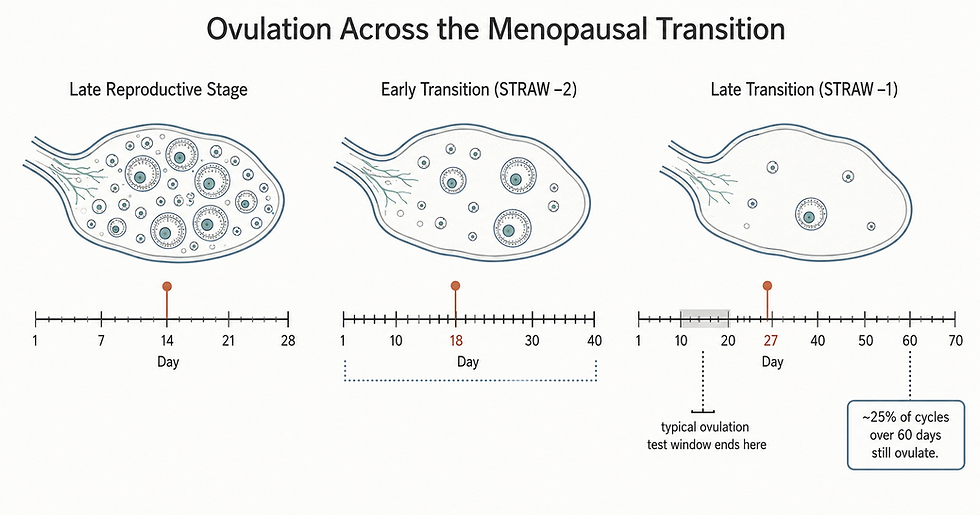
The word insufficiency was chosen on purpose. Unlike menopause, POI is not always a hard stop. Ovarian activity can flicker back on, and that distinction is the whole reason the question "can premature ovarian failure be reversed" has a more hopeful answer than most pages admit.
Who this post is for:
Women recently diagnosed with POI or POF who want options beyond "wait for menopause"
Anyone with diminished ovarian reserve or a very low AMH hoping to use their own eggs
Women told donor eggs are their only path who want to understand what the evidence really supports
Patients researching ovarian rejuvenation and regenerative fertility treatments
Do "Natural" Approaches Work? What the Evidence Says
"Natural" gets searched constantly because it feels safe and in your control. Here is the straight version, supplement by supplement.
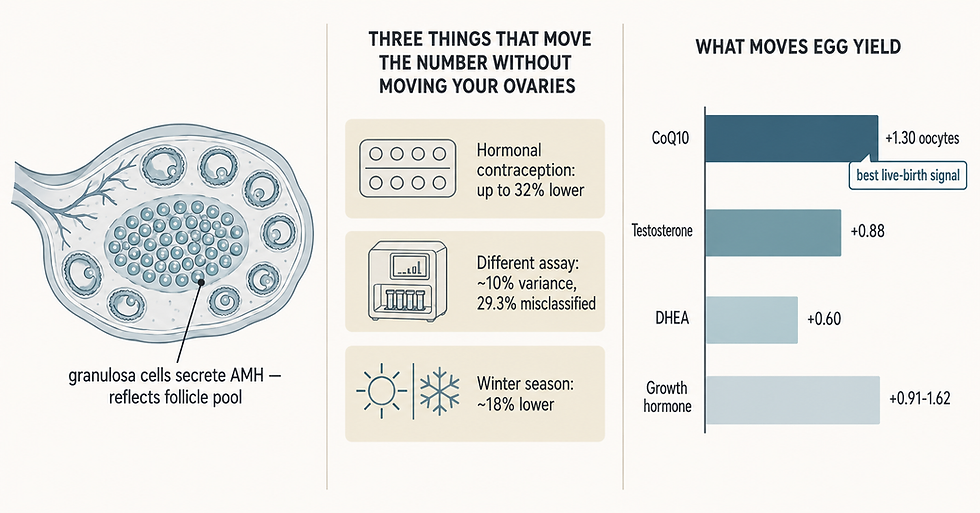
DHEA. Widely prescribed for low ovarian reserve, but the 2024 Cochrane review of androgens in assisted reproduction found DHEA likely makes little to no difference to live birth rates (odds ratio 1.30, not statistically significant across 9 trials). It may modestly nudge follicle count and lower the medication doses needed for IVF — useful, but not a reversal.
CoQ10. This has the strongest signal of any over-the-counter option. A 2024 meta-analysis in Annals of Medicine found CoQ10 pretreatment was linked to a higher clinical pregnancy rate (odds ratio 1.84) and more eggs retrieved in women with diminished ovarian reserve going through IVF. CoQ10 supports the energy machinery inside the egg; it does not regrow a depleted follicle pool.
Melatonin, vitamin D, and resveratrol. Evidence here is thin. Melatonin shows mixed IVF results, vitamin D has no proven fertility-restoring effect, and resveratrol has not improved egg outcomes in studies. A review of "natural products" for POF shows interesting antioxidant activity in animal models, but no human trial has translated that into restored ovarian reserve.
The honest summary: antioxidants and lifestyle steps can optimize the follicles you still have, which is worth doing. None of them has been shown to reverse POF or rebuild egg supply. If you want a clinician-guided antioxidant approach rather than a cabinet full of guesses, RFC's Rejoova supplements are designed around egg-quality support, and the same logic that helps after 40 applies here — see our breakdown of how to improve egg quality after 40.
What HRT Can and Can't Do for Fertility
Most women with POI are placed on hormone replacement therapy (HRT), and that is appropriate — the 2024 ESHRE/ASRM/IMS guideline on POI recommends it until roughly the natural age of menopause to protect bone and heart health and ease symptoms. But the same guideline is clear on the part that matters most to you: HRT does not restore fertility and is not contraception. It replaces the hormones your ovaries aren't making; it does not switch the ovaries back on. Knowing that protects you from waiting on a treatment that was never going to do this job.
How Often Does the Ovary Restart on Its Own?
This is the number conventional clinics rarely lead with. In a landmark study of 358 women with POF, about 24% showed signs of ovarian function returning, and 4.4% conceived spontaneously — most within the first year after diagnosis. A long-term follow-up in Clinical Endocrinology found that the cumulative chance of a spontaneous pregnancy climbs over the first few years, then plateaus around 6%.
Women more likely to see function return tend to have secondary (rather than primary) amenorrhea, visible follicles on ultrasound, and a shorter time since their periods stopped. The takeaway is not "just wait" — it's that a living, occasionally-active ovary is exactly the biology that regenerative treatments aim to amplify. Age does not determine the outcome here as cleanly as the averages suggest; residual follicle activity does.
What the Research Shows — Treatments That Reactivate Follicles
Here is the question almost no other article answers directly: if natural remedies won't reverse POF and HRT won't restore fertility, what actually can reactivate the ovary? The most promising evidence is in regenerative therapies that deliver growth factors and your own stem cell signals straight to the ovary.
Intraovarian PRP. Platelet-rich plasma made from your own blood is injected into the ovaries to trigger follicle activity. In the largest single study of women with POI — 311 patients published in Aging — 64.8% developed new antral follicles, 7.4% conceived spontaneously, and 8.0% achieved a live birth or sustained implantation. A 2024 meta-analysis in the Journal of Ovarian Research confirmed PRP raises AMH and antral follicle count and lowers FSH in diminished ovarian reserve patients. The honest caveat: randomized trials so far show the markers improve, but they have not yet confirmed higher pregnancy or live-birth rates versus no treatment. PRP is best understood as evidence-supported but still investigational.
Bone marrow stem cell–enriched PRP. This goes a step further than PRP alone. A short course of G-CSF mobilizes stem cells out of your own bone marrow into your blood; that blood is then concentrated into a stem cell factor–enriched plasma and injected into both ovaries. In the original ASCOT study in Fertility and Sterility, follicle count and AMH improved in 81% of treated women (13 of 16), and five pregnancies followed, three of them natural. The more recent Stem Cell Regenera study in Aging (2025) reported oocyte activation in 68.3% of 145 women with ovarian failure, with a 7.1% spontaneous and 14.1% IVF pregnancy rate. This is the approach behind RFC's bone marrow stem cell–enriched PRP protocol.
Mesenchymal stem cells (MSCs). In two documented case reports of women with POF, autologous bone marrow MSC injection restored estrogen production and menstruation within about seven months. MSC therapy shows the most encouraging early pregnancy signals in small studies, but it remains the least standardized and most experimental of the three.
How these options compare:
Approach | What it does | Effect on follicles / markers | Pregnancy signal | Evidence level |
CoQ10 / DHEA (supplements) | Supports existing egg function | Small rise in AFC; CoQ10 raises IVF pregnancy odds (OR 1.84) | No reversal; helps existing follicles | Moderate (RCTs) |
Hormone therapy (HRT) | Replaces missing hormones | Protects bone & heart; no follicle effect | Does not restore fertility | Guideline-recommended |
Intraovarian PRP | Growth factors injected into ovary | AMH +0.1–0.36 ng/mL; AFC +1–2; new follicles in ~65% | ~7% spontaneous, ~8% live birth (POI, uncontrolled) | Low–moderate |
Bone marrow stem cell–enriched PRP | G-CSF + stem cell factors injected into ovary | Activation in 68–81% of patients | ~7% spontaneous + ~14% IVF pregnancy | Early / pilot |
Mesenchymal stem cells (MSC) | Stem cell transplant to the ovary | Restored menses in case reports; ↑ follicle counts | Strongest early signal, smallest studies | Very early / experimental |

PRP vs. Bone Marrow Stem Cell–Enriched PRP: How to Decide
Both start from your own body and aim to wake up the follicles you still have. The difference is what gets delivered.
Intraovarian PRP alone is right if you:
Have diminished ovarian reserve or early POI with some residual activity
Want the most-studied regenerative option with a lighter protocol
Are looking for a first regenerative step before more intensive approaches
Bone marrow stem cell–enriched PRP (with G-CSF) may be the better fit if you:
Have a very low AMH, longer-standing POI, or early menopause
Did not respond to PRP alone or to prior IVF cycles
Want the added stem cell signaling that drove the highest activation rates in the studies above
The right choice depends on your AMH, follicle count, how long your ovaries have been quiet, and your goals. RFC also offers adipose-PRP and a combined Super Ovarian Rejuvenation protocol for more complex cases — none of which conventional clinics tend to offer, which is part of why their flat "donor eggs only" answer reflects their limits, not your prognosis.
What to Expect — Tests, Timeline, Costs, and Next Steps
Tests to request first. Before any treatment decision, get a clear baseline: AMH, day-3 FSH and estradiol, and an antral follicle count on ultrasound. These three numbers tell you whether residual follicle activity is present — the single biggest predictor of who responds.
What the timeline looks like. The bone marrow protocol runs over about five days: four daily G-CSF injections (the first taught in clinic, the rest at home), then a single in-office blood draw and ultrasound-guided ovarian injection. Most published improvements in AMH and follicle count appear within the first two weeks to three months, and are most pronounced in the first three to six months.
Questions to ask any clinic:
Based on my AMH and follicle count, am I a realistic candidate — or are you screening me out?
What are your own activation and pregnancy numbers, not just the published averages?
What happens after activation — natural conception, IVF, or egg freezing?
Cost realities. Regenerative ovarian treatments are typically self-pay, since they remain investigational. Intraovarian PRP commonly runs in the low thousands per cycle nationally, with stem cell–enriched protocols higher; exact pricing varies by clinic and number of cycles. See RFC's pricing and financing options for specifics, and ask what is included before you commit.
If treatment isn't the right fit. Honest counseling matters. For some women, egg freezing after activation, IVF, or donor eggs will be the most reliable path — and you deserve a clinic that will tell you that directly rather than sell you a cycle that won't help.
Frequently Asked Questions
Can premature ovarian failure be reversed naturally?
Not by supplements or diet alone — no natural protocol has been proven to reverse premature ovarian failure or rebuild egg supply. Antioxidants like CoQ10 can support the eggs you still have, and the ovary sometimes reactivates on its own in a minority of women. The treatments with the strongest reactivation evidence are regenerative procedures like intraovarian PRP and bone marrow stem cell–enriched PRP, which use your own cells.
What is the best treatment for low AMH or diminished ovarian reserve?
There is no single best answer; it depends on your follicle count and goals. CoQ10 has the best supplement evidence for IVF outcomes (Annals of Medicine, 2024), while intraovarian PRP and stem cell–enriched PRP have shown rises in AMH and antral follicle count. A baseline AMH, FSH, and ultrasound follicle count should guide the decision.
Can you still get pregnant with premature ovarian failure?
Yes, for some women. Roughly 5–10% conceive spontaneously after a POI diagnosis, usually within the first few years (J Clin Endocrinol Metab, 2011). Regenerative treatments aim to improve those odds, and donor eggs remain the most reliable option when the ovaries no longer respond.
Does ovarian PRP or stem cell treatment really work?
The markers respond consistently: studies show higher AMH, more antral follicles, and follicle activation in 65–81% of treated women. Pregnancy outcomes are more variable, and randomized trials have not yet confirmed higher live-birth rates, so these remain investigational. They work best in women who still have some residual follicle activity.
What's the difference between premature ovarian failure and early menopause?
Menopause is permanent; premature ovarian insufficiency is not always. With POI the ovaries can intermittently resume activity, which is why spontaneous pregnancy is still possible and why "insufficiency" replaced "failure" in medical use.
How soon would I see results from ovarian rejuvenation?
In published studies, changes in AMH and follicle count typically appear within two weeks to three months, with the strongest effects in the first three to six months. Response is monitored by ultrasound and repeat bloodwork.
The Bottom Line
You cannot supplement your way out of premature ovarian failure, and HRT alone won't restore fertility — but "nothing can be done" is not true either. The most promising path is to support egg quality with what the evidence backs, then consider regenerative treatments that can reactivate the dormant follicles your ovaries still hold. Your prognosis is driven by residual follicle activity, not by the discouraging national averages from conventional clinics.
If you want to know whether your AMH and follicle count make you a candidate for ovarian rejuvenation, request a consultation with Rejuvenating Fertility Center. We'll review your numbers honestly and walk you through the options that fit your body — including the regenerative protocols most clinics don't offer.