
Fertility challenges women 35+: 30-40% IVF success
Updated: Mar 18

Many women believe fertility disappears after 35, but conception rates remain possible even with age-related changes. While biological shifts create new challenges like diminished ovarian reserve and unexplained infertility, understanding the causes, diagnostic tools, and personalized treatment options empowers you to navigate your path forward. This guide clarifies what’s happening in your body, debunks common myths, and explores proven solutions alongside emerging therapies to help you make informed decisions about your fertility journey.
Table of Contents
Key takeaways
Point | Details |
Age impacts fertility through declining egg quality and quantity | Biological aging reduces ovarian function, making conception progressively harder after 35. |
Diagnostics like AMH and AFC identify diminished ovarian reserve | These tests estimate remaining egg supply but cannot predict individual pregnancy success. |
IVF outcomes vary by age and egg source | Success rates decrease with maternal age using own eggs, while donor eggs maintain higher rates. |
Emerging therapies offer new hope but need validation | Ovarian rejuvenation and stem cell treatments show promise yet remain experimental. |
Holistic support enhances treatment outcomes | Hormonal optimization and psychosocial counseling improve adherence and reduce stress. |
Understanding age-related fertility decline
Your ovaries contain a finite number of eggs established before birth, and this supply steadily depletes over time. After 35, the pace of egg loss accelerates while remaining eggs accumulate chromosomal abnormalities, directly impacting your ability to conceive and maintain a healthy pregnancy. This dual decline in quantity and quality forms the biological foundation of age-related fertility challenges.
Diminished ovarian reserve (DOR) becomes increasingly common in your late 30s and early 40s. DOR means fewer eggs remain available for ovulation each cycle, reducing monthly conception opportunities. Your body’s hormonal signaling shifts as ovarian function wanes, creating irregular cycles and shorter fertile windows that complicate timing for conception attempts.
Conception rates drop significantly after 35 due to these compounding factors. Natural monthly pregnancy chances decrease from approximately 20% in your early 30s to 5% by age 40. These statistics reflect biological realities, not personal shortcomings, and understanding them helps set realistic expectations while exploring appropriate interventions.
Several interconnected mechanisms drive this decline:
Chromosomal errors increase in aging eggs, raising miscarriage risk
Mitochondrial function deteriorates, reducing egg energy and viability
Follicle development becomes less responsive to hormonal signals
Uterine receptivity may decline, though less dramatically than egg quality
Pro Tip: Understanding your baseline fertility status through comprehensive testing allows you to make time-sensitive decisions with confidence rather than anxiety.
Recognizing these biological patterns empowers you to pursue timely evaluation and consider interventions before fertility potential diminishes further. The goal is not to alarm but to inform, giving you the knowledge needed to advocate effectively for your reproductive goals and explore IVF success rates for women over 35 matched to your situation.
Diagnosing diminished ovarian reserve and unexplained infertility
Accurate diagnosis forms the cornerstone of effective fertility treatment. AMH and AFC tests assess ovarian reserve by measuring hormone levels and counting visible follicles via ultrasound. AMH (anti-Müllerian hormone) reflects the pool of growing follicles, while AFC (antral follicle count) provides a snapshot of follicles available in your current cycle.
These tests offer valuable insights but come with important limitations. Low AMH or AFC indicates reduced egg quantity, yet neither predicts egg quality or your individual pregnancy potential with certainty. Some women with diminished reserve conceive naturally, while others with normal results face unexplained difficulties. The tests guide treatment planning but cannot guarantee outcomes.
Unexplained infertility receives its diagnosis when comprehensive evaluation reveals no identifiable cause despite:
Regular ovulation confirmed through tracking
Open fallopian tubes verified by imaging
Normal sperm parameters in your partner
No structural uterine abnormalities
Adequate ovarian reserve markers
This diagnosis can feel frustrating because it lacks the clarity of a specific problem to fix. However, it often reflects subtle factors current testing cannot detect, such as egg quality issues, implantation barriers, or immunological factors. Treatment can still succeed by addressing probable underlying mechanisms even without definitive identification.
Diagnosing diminished ovarian reserve requires interpreting multiple data points together rather than relying on single test results. Your age, cycle history, previous pregnancy outcomes, and response to fertility medications all contribute to a complete picture. Comprehensive evaluation typically includes day 3 FSH levels, estradiol measurements, and sometimes additional specialized testing based on your specific circumstances.
This thorough approach ensures treatment recommendations align with your unique fertility profile rather than applying generic protocols. The diagnostic phase may feel time-consuming, but precision here prevents wasted cycles on inappropriate interventions and directs you toward strategies most likely to succeed given your biological reality.
Common misconceptions about fertility challenges
Fertility misinformation creates unnecessary anxiety and delays appropriate care. One pervasive myth suggests natural conception becomes impossible after 35, but this oversimplifies a complex reality. While conception becomes more difficult, many women in their late 30s and early 40s conceive without medical intervention. Probability decreases with age, yet possibility persists, especially in the 35 to 38 age range.
Another common misconception positions IVF as a guaranteed solution regardless of age or circumstances. In reality, IVF success varies widely based on egg quality, ovarian reserve, uterine health, and other individual factors. Success rates decline with maternal age when using your own eggs, though strategic protocol adjustments and complementary therapies can optimize outcomes within your biological constraints.
Many believe all fertility treatments follow identical protocols, but personalization is critical for success. Your treatment plan should reflect your specific diagnostic findings, medical history, and personal preferences. Cookie-cutter approaches ignore the biological diversity among patients and reduce effectiveness compared to tailored strategies.
Additional misconceptions to clear up:
Lifestyle changes alone can fully reverse age-related fertility decline (they help but cannot eliminate biological aging effects)
Multiple IVF cycles guarantee eventual success (cumulative success improves with additional attempts but never reaches 100%)
Fertility supplements work the same for everyone (responses vary based on individual nutritional status and deficiencies)
Stress alone causes infertility (stress impacts fertility but rarely serves as the sole cause)
Pro Tip: Question absolute statements about fertility. Biological systems are complex, and individual variation means your experience may differ from population statistics.
Debunking these myths helps you approach fertility decisions with realistic expectations and appropriate urgency. Understanding what treatments can and cannot achieve prevents disappointment while directing energy toward evidence-based strategies most likely to help you reach your goals.
Comparing treatment outcomes: IVF with own eggs vs donor eggs
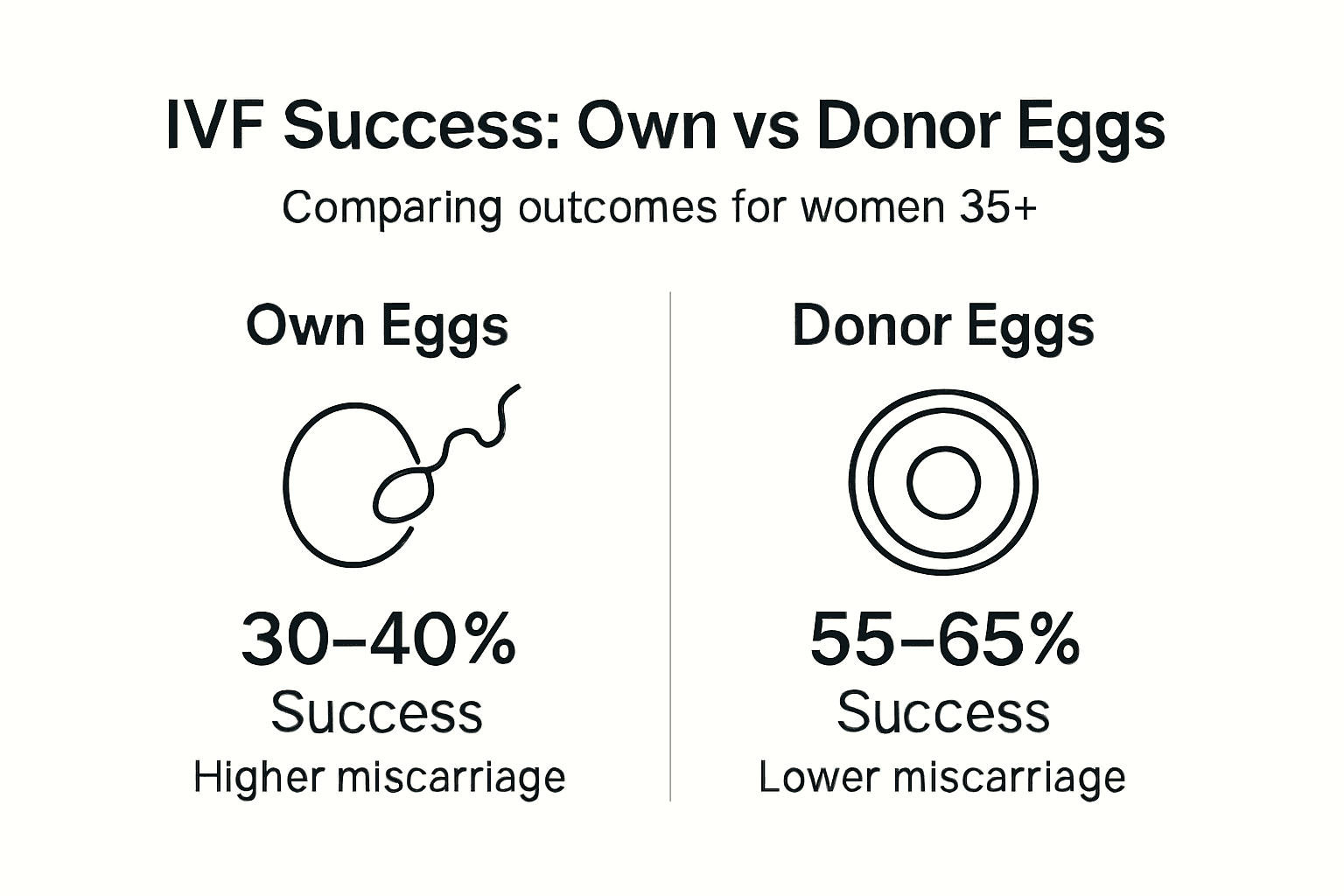
Treatment success depends significantly on egg source, and understanding this distinction helps set appropriate expectations. IVF success declines with maternal age when using your own eggs, primarily due to increasing chromosomal abnormalities. Live birth rates drop from approximately 30-40% per cycle at age 35 to under 10% by age 42 with autologous eggs.
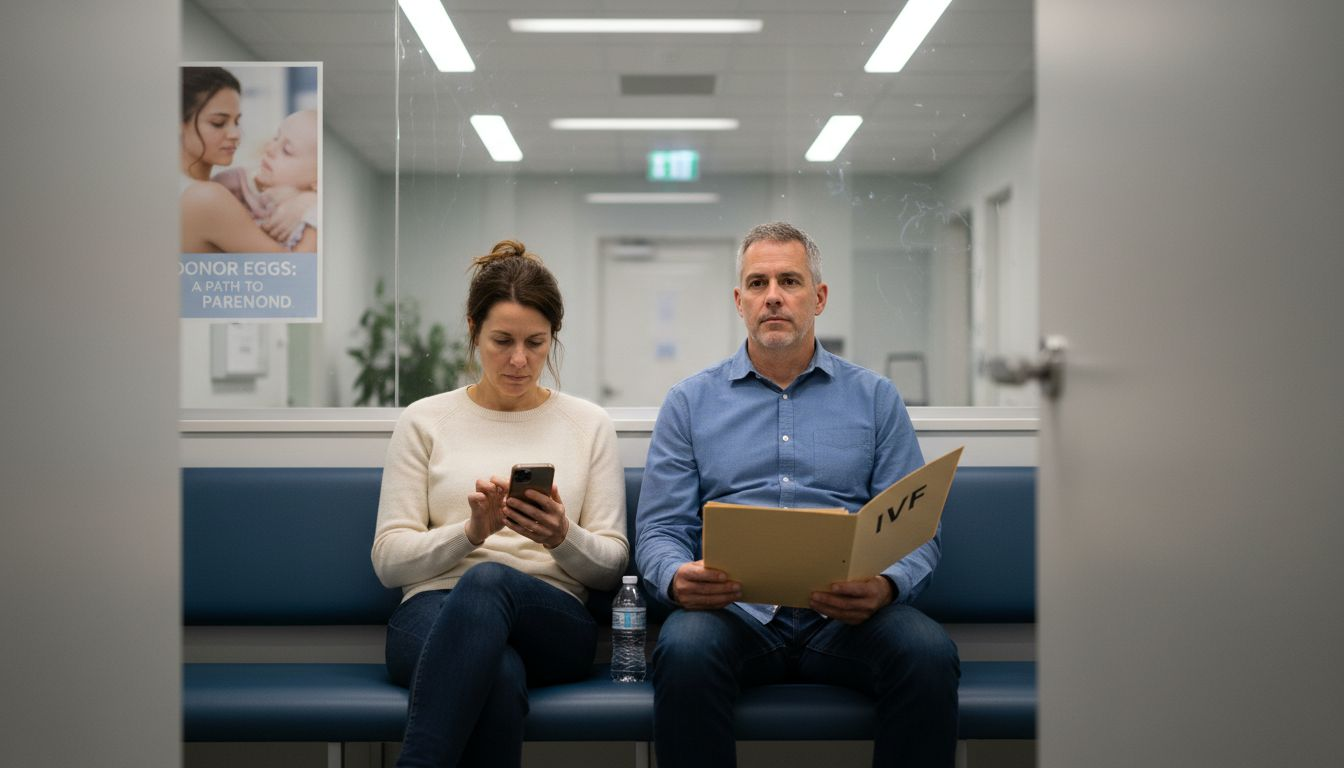
Donor eggs fundamentally change this equation by providing chromosomally healthier eggs from younger donors. Success rates with donor eggs remain consistently higher, typically 50-60% per cycle regardless of recipient age. This advantage stems from younger egg quality overriding the impact of recipient age on pregnancy outcomes, though uterine receptivity still plays a role.
Factor | IVF with Own Eggs (Age 35-40) | IVF with Donor Eggs |
Live birth rate per cycle | 20-35% (declining with age) | 50-60% (stable across recipient ages) |
Miscarriage risk | 20-35% | 10-15% |
Chromosomal abnormality rate | Increases significantly with age | Low (reflects donor age) |
Genetic connection | Maintained | Not present |
Emotional considerations | May prefer genetic link | Requires processing loss of genetic connection |
Cost per cycle | Typically lower | Higher due to donor compensation |
The decision between own and donor eggs involves balancing success probability against personal values around genetic connection. Some women prioritize maximizing pregnancy chances regardless of genetic link, while others strongly prefer biological connection even with lower success rates. Neither choice is wrong, but both require honest assessment of your priorities and realistic understanding of probable outcomes.
Your ovarian reserve markers significantly influence this decision. Women with severely diminished reserve face very low success rates with own eggs, making donor eggs a more practical path. Those with moderate reserve may still achieve reasonable success with autologous eggs, especially when IVF procedure types for women over 35 are optimally matched to their situation.
Financial considerations also matter, as donor egg IVF success comes at higher cost per cycle but often requires fewer attempts to achieve pregnancy. Calculating cumulative cost across multiple cycles with own eggs versus fewer cycles with donor eggs provides a complete financial picture for decision making.
Innovative treatment modalities: ovarian rejuvenation and stem cell therapy
Emerging regenerative approaches offer new possibilities for women with diminished ovarian reserve. Ovarian rejuvenation techniques, primarily using platelet-rich plasma (PRP) injections directly into ovarian tissue, aim to stimulate dormant follicles and improve egg quality through growth factors and regenerative signaling. Ovarian rejuvenation therapies show AMH increases of 20-40% in preliminary studies, suggesting potential for functional improvement.
Stem cell therapy represents another experimental frontier, with researchers investigating whether introducing stem cells into ovarian tissue can restore function or even generate new eggs. Early animal studies demonstrate proof of concept, but human applications remain highly experimental with limited clinical data supporting widespread use.
These treatments share several important characteristics:
They remain investigational without FDA approval for fertility enhancement
Long-term safety and effectiveness require further validation through controlled trials
Optimal candidate selection criteria are still being established
Integration with conventional IVF protocols is not yet standardized
Current evidence suggests ovarian rejuvenation may benefit specific patient subgroups, particularly women with poor ovarian reserve who have exhausted conventional options. However, the degree of functional improvement varies widely among individuals, and not all patients respond. Realistic counseling about experimental status and uncertain outcomes is essential before pursuing these therapies.
Ovarian rejuvenation therapies typically involve minimally invasive procedures performed under light sedation. PRP is prepared from your own blood and injected into ovarian tissue through transvaginal ultrasound guidance. The procedure carries low risk but requires monitoring for response through serial hormone testing and follicle tracking.
Ongoing clinical trials continue investigating ovarian rejuvenation clinical evidence, with researchers working to identify biomarkers predicting treatment response and optimal protocols maximizing benefit. As data accumulates, these therapies may transition from experimental to established options, but current patients should approach them with cautious optimism rather than expectation of guaranteed improvement.
Wellness and supportive care in fertility management
Fertility treatment succeeds best when embedded within comprehensive wellness strategies addressing your whole health. Hormonal therapies beyond reproductive medications can optimize your body’s environment for conception. Thyroid optimization, vitamin D supplementation when deficient, and management of conditions like insulin resistance create metabolic conditions supporting embryo implantation and early pregnancy development.
Psychosocial support proves crucial for navigating the emotional intensity of fertility challenges. Counseling reduces stress and anxiety while improving treatment adherence and decision-making quality. Studies demonstrate that women receiving psychological support during IVF show better outcomes, likely through mechanisms involving stress hormone reduction and improved self-care during treatment cycles.
A holistic approach recognizes that your physical and emotional states interconnect during fertility treatment. Addressing both dimensions creates optimal conditions for success while protecting your wellbeing regardless of outcomes. Support strategies include:
Professional counseling specialized in reproductive challenges
Mind-body programs like meditation or acupuncture
Nutritional optimization through whole foods and targeted supplementation
Regular exercise appropriate for fertility treatment phases
Sleep hygiene practices supporting hormonal regulation
Fertility supplements and wellness programs complement medical treatment rather than replacing it. Coenzyme Q10, for example, may improve egg quality through enhanced mitochondrial function, while omega-3 fatty acids support inflammation regulation. Evidence quality varies across supplements, making expert guidance important for selecting those most likely to benefit your specific situation.
Holistic fertility approaches integrate conventional and complementary strategies based on individual needs. Some women benefit greatly from acupuncture for stress management and possibly improved uterine blood flow, while others prioritize nutritional interventions or mind-body practices. Customization ensures resources invest where they will provide maximum value for your unique circumstances.
This integrative perspective acknowledges that fertility extends beyond reproductive organs to encompass your entire physiological and psychological state. Supporting overall health creates the foundation upon which targeted fertility interventions work most effectively.
Supporting patients through the fertility journey
Infertility creates profound emotional distress that rivals the psychological impact of serious medical diagnoses. Acknowledging this reality validates your experience and underscores why emotional support belongs at the center of fertility care, not as an afterthought. Counseling provides safe space to process grief, anxiety, relationship strain, and the identity questions infertility often triggers.
Patient-centered communication transforms the treatment experience by ensuring you understand options, participate actively in decisions, and feel heard by your medical team. When clinicians take time explaining treatment rationale and addressing your specific concerns, adherence improves and satisfaction increases regardless of pregnancy outcomes. Shared decision making respects your values and priorities while leveraging medical expertise.
Access to support resources helps you navigate the fertility journey’s unique challenges:
Online and in-person support groups connect you with others who understand your experience firsthand
Educational resources help you become an informed advocate for your care
Financial counseling addresses the significant cost burden of fertility treatment
Mind-body programs provide coping skills for managing treatment stress
These resources work best when integrated into comprehensive care rather than pursued in isolation. Support resources for IVF journey coordinate medical treatment with emotional, financial, and practical assistance, recognizing that success encompasses more than pregnancy rates alone.
Building resilience throughout treatment protects your wellbeing during the inevitable ups and downs of fertility care. Resilience does not mean suppressing difficult emotions but rather developing healthy coping mechanisms and maintaining perspective when faced with disappointment. Professional support teaches these skills while normalizing the emotional challenges you are experiencing.
Your fertility journey deserves care that treats you as a whole person, not just a collection of reproductive organs and hormone levels. Comprehensive support addresses medical, emotional, and practical needs simultaneously, maximizing both treatment success and your overall wellbeing through the process.
Explore personalized fertility solutions at Rejuvenating Fertility Center
Your fertility journey deserves care tailored precisely to your unique needs and circumstances. Rejuvenating Fertility Center offers advanced treatments including IVF, donor eggs, and ovarian rejuvenation within a framework prioritizing personalization and innovation. Personalized IVF treatment plans begin with comprehensive diagnostics, ensuring protocols match your specific ovarian reserve, medical history, and reproductive goals rather than following generic approaches.
The center integrates cutting-edge therapies with proven treatments, giving you access to emerging options like regenerative medicine alongside established procedures. This combination provides maximum flexibility for optimizing outcomes while supporting you through both medical and emotional dimensions of fertility care. Comprehensive fertility treatment options address diverse needs from IUI through advanced IVF techniques.
Ready to take the next step? Rejuvenating Fertility Center provides the expertise, technology, and compassionate support you need to navigate your path to parenthood with confidence.
Frequently asked questions
What are the main causes of fertility decline after 35?
Age-related decline stems primarily from decreasing egg quantity and deteriorating egg quality as chromosomal errors accumulate. Diminished ovarian reserve reduces monthly conception opportunities while hormonal signaling becomes less efficient. Other contributing factors may include uterine changes, though these impact fertility less dramatically than egg-related issues. Individual diagnostic profiles determine specific causes and appropriate treatment strategies.
How effective are ovarian rejuvenation therapies?
Ovarian rejuvenation shows early promise with preliminary results showing AMH improvements of 20-40% in small studies, but treatments remain experimental without FDA approval. Response varies significantly among individuals, with some experiencing notable improvement while others show minimal change. Larger controlled trials are ongoing to validate long-term safety and effectiveness. Consult specialists to determine if you might be a suitable candidate for these investigational therapies given your specific situation. Ongoing ovarian rejuvenation research continues clarifying optimal protocols and patient selection.
Can women over 35 conceive naturally despite diminished ovarian reserve?
Natural conception remains possible with diminished ovarian reserve, though probability decreases compared to women with normal reserve. Your individual chances depend on the severity of reserve depletion, egg quality, and other fertility factors. Comprehensive fertility evaluation provides personalized estimates of natural conception likelihood versus benefits of intervention. Many women with moderate DOR conceive naturally, especially when timing intercourse precisely during fertile windows, though medical assistance often improves success rates.
What supportive care options enhance IVF success?
Hormonal optimization therapies, including thyroid management and vitamin D supplementation, create favorable conditions for embryo implantation. Psychosocial counseling reduces stress and improves treatment adherence, potentially impacting outcomes through stress hormone regulation. Lifestyle interventions like nutritional optimization, appropriate exercise, and sleep hygiene support overall health during treatment. Fertility supportive care integrates these approaches with medical treatment, recognizing that physical and emotional wellbeing interconnect during your fertility journey.
Recommended

