
What Is Egg Freezing? 90% Survival Rate Boosts Options
Updated: Mar 18

Your fertility naturally declines starting in your mid-30s, and by age 37, natural fertility drops roughly 50% compared to age 30. Egg freezing offers a proactive solution to preserve your reproductive options before age-related decline impacts your ability to conceive. This guide explains how the process works, factors affecting success, and what you need to know to make informed decisions about fertility preservation.
Table of Contents
Key Takeaways
Point | Details |
Preservation Timing | Egg freezing works best before age 35 when egg quality and quantity are optimal. |
Survival Technology | Modern vitrification achieves over 90% egg survival rates after thawing. |
Success Factors | Your age at freezing and ovarian reserve directly determine future pregnancy chances. |
Realistic Expectations | Egg freezing increases pregnancy options but does not guarantee success. |
Personalized Assessment | Consultation with fertility specialists is essential for evaluating candidacy and timing. |
Introduction to Egg Freezing
Egg freezing allows women to extend their reproductive window by storing viable eggs before biological decline limits pregnancy options. The procedure involves retrieving eggs from your ovaries, freezing them through advanced vitrification technology, and storing them for future use when you’re ready to conceive. This method specifically addresses the challenges faced by women over 35 who experience declining fertility due to age-related ovarian reserve depletion.
Ideal candidates include:
Women over 35 who want to delay pregnancy for personal or professional reasons
Those diagnosed with diminished ovarian reserve who need immediate preservation
Individuals facing medical treatments that could impact fertility
Anyone seeking reproductive autonomy and future pregnancy options
The primary benefit is maintaining control over your reproductive timeline. As egg quality and quantity diminish significantly starting in your mid-30s, freezing eggs earlier preserves healthier cells with better fertilization potential. This approach gives you time to find the right partner, achieve career goals, or address health concerns without sacrificing your ability to have biological children.
How Egg Freezing Works: Biological and Technical Overview
The egg freezing process involves three main medical stages that typically span two to three weeks. Understanding each step helps you prepare physically and emotionally for the procedure.
Ovarian Stimulation: You receive daily hormone injections for 10 to 14 days to stimulate your ovaries to mature multiple eggs simultaneously, rather than the single egg released during a natural cycle.
Monitoring and Timing: Regular ultrasounds and blood tests track follicle development and hormone levels to determine the optimal retrieval timing.
Egg Retrieval: A minimally invasive procedure performed under sedation uses ultrasound guidance to collect mature eggs through the vaginal wall, typically taking 20 to 30 minutes.
Vitrification: Retrieved eggs undergo rapid freezing using the vitrification method, which prevents ice crystal formation and achieves over 90% egg survival rates upon thawing.
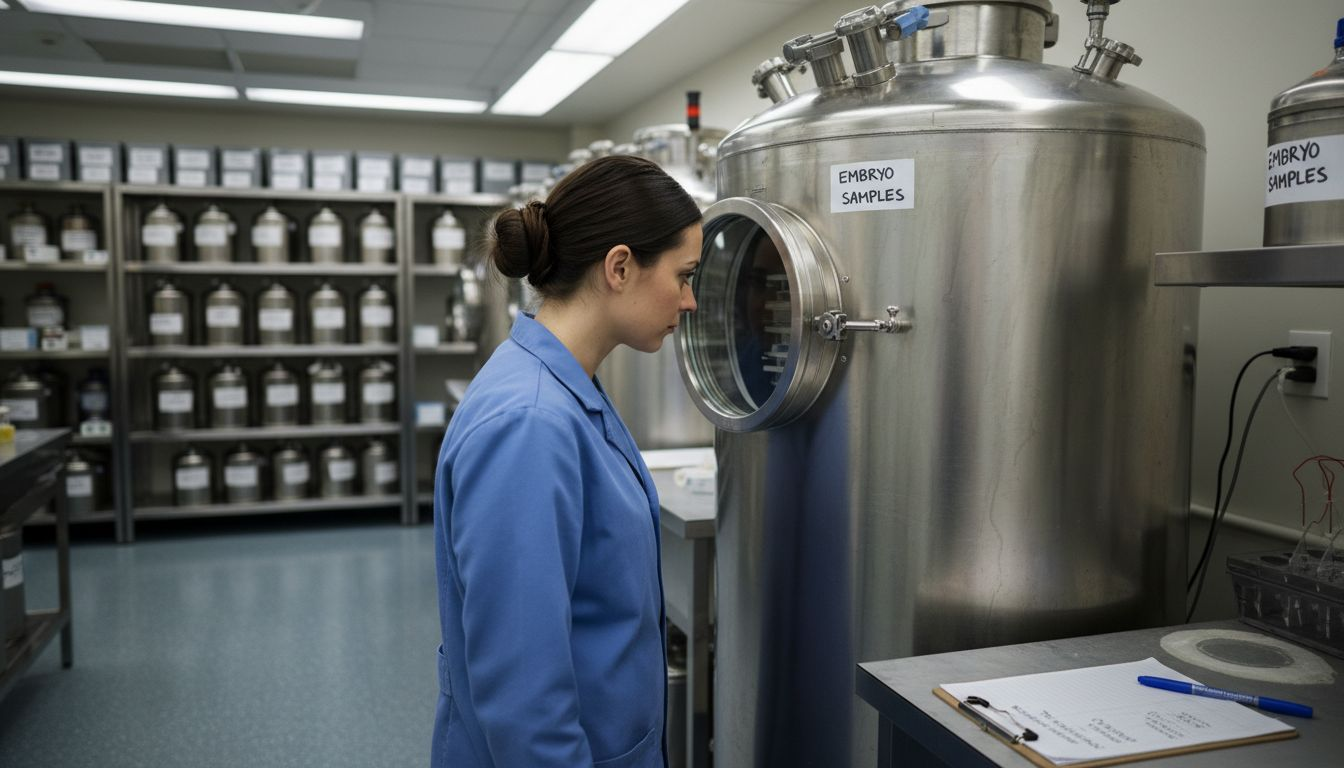
Cryopreservation Storage: Frozen eggs remain stored in liquid nitrogen at extremely low temperatures until you’re ready to use them.
The number of eggs retrieved depends on your ovarian reserve, typically ranging from 8 to 15 eggs per cycle for women under 38. You may need multiple cycles to bank sufficient eggs for realistic pregnancy chances, especially if your ovarian reserve is already declining.
Pro Tip: Schedule your step-by-step egg freezing procedure consultation at least three months before you want to start, allowing time for baseline fertility testing, insurance verification, and cycle planning around your schedule.
Age-Related Fertility Decline and Its Impact on Egg Freezing Outcomes
Your age at the time of egg freezing is the single most critical factor determining future success. Live birth rates decline significantly as age at egg freezing increases beyond 35, making timing essential for optimal outcomes.
Biological changes affect both egg quantity and quality:
Ovarian reserve naturally depletes, reducing the number of eggs available for retrieval
Chromosomal abnormalities increase with maternal age, lowering fertilization and implantation rates
Egg quality deterioration affects embryo development potential even after successful freezing
The table below illustrates how fertility success rates by age impact expected outcomes:
Age at Freezing | Eggs Needed for 70% Live Birth Chance | Average Retrieval per Cycle |
Under 35 | 8 to 10 eggs | 12 to 15 eggs |
35 to 37 | 10 to 15 eggs | 10 to 12 eggs |
38 to 40 | 15 to 20 eggs | 6 to 10 eggs |
Over 40 | 25+ eggs | 3 to 6 eggs |
Women who freeze eggs before age 35 typically achieve pregnancy rates comparable to fresh IVF cycles using their own eggs. After 38, success rates drop substantially because egg quality decline accelerates regardless of freezing technology. Understanding these realities helps you set appropriate expectations and make timely decisions about fertility preservation.
Delaying egg freezing by even two years can significantly impact the number of eggs you retrieve and your ultimate pregnancy chances. If you’re considering this option, acting sooner rather than later maximizes your investment and outcomes.
Diminished Ovarian Reserve: Challenges and Considerations
Diminished ovarian reserve means your egg supply is lower than expected for your age, diagnosed through blood tests measuring Anti-Müllerian Hormone (AMH) and ultrasound imaging counting Antral Follicle Count (AFC). This condition directly affects egg freezing by reducing the number of eggs retrieved and affecting timing decisions.
Key implications include:
Fewer eggs collected per stimulation cycle compared to women with normal reserve
Increased likelihood of needing multiple retrieval cycles to bank adequate eggs
Greater urgency to pursue preservation before further decline occurs
Potential need to consider alternative options like donor eggs alongside or instead of freezing
Women with diminished ovarian reserve face a compressed timeline for effective fertility preservation. Your fertility specialist may recommend aggressive treatment protocols, back-to-back retrieval cycles, or adjunct therapies to maximize egg yield. Some patients successfully build an egg bank through two or three cycles, while others with severely diminished reserve may retrieve too few eggs to make freezing practical.
Pro Tip: If you have diminished ovarian reserve, consider egg freezing with diminished ovarian reserve protocols that include priming medications or supplements like DHEA and CoQ10, which some studies suggest may improve egg quality and retrieval numbers.
Your baseline fertility testing reveals whether egg freezing remains a viable option or if exploring donor eggs or embryo banking offers better chances. This assessment requires honest consultation with a reproductive endocrinologist who can interpret your specific markers and present realistic scenarios.
Common Misconceptions About Egg Freezing Debunked
Several persistent myths create unrealistic expectations or unnecessary fears about egg freezing. Correcting these misconceptions empowers you to make informed decisions based on medical facts rather than assumptions.
Myth 1: Egg freezing guarantees future pregnancy Egg freezing does not guarantee pregnancy; success depends on age and egg quality at the time of freezing. Even with optimal conditions, each thawed egg has approximately a 4 to 12% chance of resulting in a live birth, which is why banking multiple eggs improves overall odds.
Myth 2: The procedure is completely risk-free and painless Egg freezing involves hormonal treatments and minor surgical procedures with some risks, including ovarian hyperstimulation syndrome, bloating, mood changes, and rare complications like infection or bleeding. Most women experience mild discomfort but recover quickly.
Myth 3: Egg freezing works equally well at any age Age dramatically affects outcomes. Freezing eggs at 42 yields significantly lower success rates than freezing at 32 because egg quality has already declined substantially by your early 40s, regardless of preservation technology.
Myth 4: Frozen eggs are damaged during thawing Modern vitrification technology results in over 90% survival rates, with thawed eggs performing nearly identically to fresh eggs in fertilization and pregnancy rates.
Myth 5: You can wait indefinitely to use frozen eggs While frozen eggs don’t age biologically, pregnancy risks increase with your age at transfer. Carrying a pregnancy after 45 poses higher health risks regardless of egg age.
Understanding these realities prevents disappointment and helps you approach common misconceptions about egg freezing with accurate expectations about what the technology can and cannot achieve.
Cost, Risks, and Practical Considerations of Egg Freezing
Egg freezing requires significant financial and time investment, making it essential to understand all costs and potential complications before committing to the process.
Financial Components:
Initial consultation and fertility testing: $500 to $1,500
Hormone medications for ovarian stimulation: $3,000 to $5,000 per cycle
Egg retrieval procedure: $5,000 to $10,000
Vitrification and initial storage: $500 to $1,000
Annual storage fees: $500 to $800 per year
Typical costs include medications, procedures, and long-term storage fees, totaling $10,000 to $20,000 for a single cycle. Most insurance plans don’t cover elective egg freezing, making these out-of-pocket expenses for most women. Additional costs arise if you need multiple cycles or eventually use the eggs for IVF.
Medical Risks:
Ovarian hyperstimulation syndrome (OHSS): overstimulated ovaries causing bloating, nausea, and rarely hospitalization
Procedural complications: infection, bleeding, or damage to surrounding organs (rare)
Anesthesia risks during egg retrieval
Emotional stress from hormone fluctuations and uncertainty about outcomes
Comparison of Fertility Preservation Options:
Method | Best For | Success Rate | Cost Range |
Egg Freezing | Single women or those without a partner | Moderate, age-dependent | $10,000 to $20,000 per cycle |
Embryo Freezing | Women with partners or using donor sperm | Higher than eggs alone | $15,000 to $25,000 per cycle |
Ovarian Tissue Freezing | Cancer patients or those needing emergency preservation | Experimental, limited data | $8,000 to $15,000 |
Practical Factors:
The process requires multiple clinic visits over two to three weeks for monitoring, flexibility to schedule retrieval on short notice, and recovery time. Emotional considerations include managing expectations, handling potential disappointment if retrieval yields fewer eggs than hoped, and making peace with uncertainty about future use.
Review egg freezing costs and finances carefully and consider whether the investment aligns with your financial situation and reproductive goals before proceeding.
Decision-Making Framework for Egg Freezing Candidacy
Deciding whether and when to freeze your eggs requires evaluating medical, personal, and financial factors through a structured approach.
Step 1: Medical Assessment Schedule consultation with a fertility specialist for comprehensive testing including AMH, AFC, FSH, and estradiol levels. Assessing AMH, AFC, and personal goals is essential for candidacy and timing. These results reveal your current ovarian reserve and help predict retrieval outcomes.
Step 2: Evaluate Medical Eligibility Review any contraindications such as active cancer, severe endometriosis, or conditions making hormone stimulation unsafe. Discuss medications you take and how they might affect the process or need temporary adjustment.
Step 3: Align with Personal Goals Consider your timeline for having children, relationship status, career plans, and why you’re considering egg freezing. Are you delaying pregnancy for specific reasons, or responding to a medical diagnosis? Your motivation affects urgency and decision-making.
Step 4: Financial and Emotional Readiness Calculate total costs including multiple potential cycles, storage fees, and future IVF expenses. Assess your emotional capacity to handle the physical process, potential disappointment, and ongoing uncertainty about whether you’ll use the eggs.
Step 5: Make an Informed Decision Weigh the probability of success based on your age and reserve against costs and personal circumstances. If testing shows good reserve and you’re under 38, freezing often makes sense if you’re not ready for pregnancy within the next two years.
Pro Tip: Don’t wait for the “perfect” time to freeze eggs. Your fertility won’t improve with waiting, and acting within the next six to twelve months typically yields better results than postponing another year. Early fertility assessment and candidacy evaluation maximizes your options.
The decision ultimately balances medical reality with personal values. Some women find peace of mind worth the investment even with moderate success odds, while others prefer alternative paths. What matters is making the choice with accurate information rather than assumptions or regrets.
Explore Personalized Fertility Preservation at Rejuvenating Fertility Center
Rejuvenating Fertility Center specializes in helping women over 35 navigate fertility preservation decisions with expert guidance tailored to your unique situation. Our team provides comprehensive egg freezing guide resources and advanced vitrification technology to maximize your outcomes. We understand the urgency you feel and offer personalized fertility assessments that clearly explain your options, realistic success rates, and customized treatment protocols. From initial consultation through retrieval and long-term storage, we support every aspect of your fertility journey. Our egg freezing services combine cutting-edge reproductive technology with compassionate care, helping you preserve your reproductive options confidently. Schedule your consultation today to explore how egg freezing fits into your personal fertility plan.
Frequently Asked Questions About Egg Freezing
How long does the entire egg freezing process take?
The active treatment phase spans two to three weeks from starting hormone injections through egg retrieval. You’ll need seven to ten monitoring appointments during stimulation, with the retrieval scheduled once eggs reach maturity. Recovery takes one to two days, though some women experience bloating for up to a week afterward.
Is there a limit to how long eggs can remain frozen?
Frozen eggs can theoretically remain viable indefinitely when properly stored in liquid nitrogen at negative 196 degrees Celsius. Successful pregnancies have resulted from eggs frozen for over a decade. The limiting factor is typically your age at embryo transfer rather than egg storage duration, as pregnancy risks increase with maternal age regardless of egg age.
How does egg freezing success compare to standard IVF?
Frozen eggs that survive thawing perform nearly identically to fresh eggs in IVF cycles, with fertilization rates around 70 to 80%. The key difference is that egg freezing adds the thaw survival step, where modern vitrification achieves over 90% success. Your age at freezing determines egg quality, which then affects fertilization and pregnancy rates just as it would in fresh IVF.
What is the emotional impact of egg freezing?
Many women experience relief and empowerment from taking proactive control over fertility, though the process also brings anxiety about outcomes and future uncertainty. Hormone medications can cause mood swings and emotional sensitivity during stimulation. Some women feel pressure or regret if they retrieve fewer eggs than hoped, while others never use frozen eggs and question the investment. Connecting with support groups or counseling helps process these complex emotions.
Can I freeze eggs if I have irregular periods?
Irregular periods often indicate hormonal imbalances or ovulation issues that require evaluation before egg freezing. Conditions like polycystic ovary syndrome (PCOS) may actually yield higher egg numbers but require modified stimulation protocols to prevent overstimulation. Your fertility specialist will assess the underlying cause of irregular cycles and determine if egg freezing remains appropriate or if addressing the condition first improves outcomes.
What happens to frozen eggs if I don’t use them?
You maintain several options for unused frozen eggs including keeping them in storage indefinitely, donating them to another woman or couple facing infertility, donating them for research purposes, or requesting disposal. Most fertility centers require annual storage fee payment and periodic consent renewal confirming your wishes. Some women keep eggs stored as backup even after completing their families, while others donate or dispose of them once no longer needed.
Recommended

