
Why Choose IUI: Fertility Impact and Advantages
Updated: Mar 18

Trying month after month without answers can leave you feeling lost, especially as each year passes after age 35. For many women, diminished ovarian reserve or unexplained infertility makes getting pregnant feel just out of reach. Intrauterine insemination, or IUI, offers a gentle yet effective solution by placing healthy sperm directly where fertilization happens best. Discover how this straightforward procedure aligns science, timing, and compassionate care to open new doors for women determined to grow their families.
Table of Contents
Key Takeaways
Point | Details |
IUI Is a Targeted Fertility Treatment | Intrauterine insemination (IUI) directly places sperm into the uterus, enhancing the chances of conception, especially for women over 35. |
Timing and Monitoring Are Essential | Close monitoring of the ovulation cycle ensures IUI is performed at the optimal time for maximized success rates. |
Minimally Invasive with Flexible Options | IUI is less invasive than IVF and can be paired with fertility medications for improved odds. |
Success Rates Vary with Age and Diagnosis | Factors like age, ovarian reserve, and sperm quality significantly influence IUI success, making personalized assessments critical. |
What Is IUI and How It Works
Intrauterine insemination (IUI) is a straightforward fertility procedure designed specifically for women like you who are navigating diminished ovarian reserve or unexplained infertility. The core concept is simple: it places sperm directly into your uterus, bypassing the cervix entirely, which dramatically shortens the distance sperm must travel to meet your egg.
This direct placement approach addresses one of nature’s biggest timing challenges. Rather than waiting for sperm to naturally navigate through the cervix and up the fallopian tubes—a journey that can take hours and eliminate many sperm along the way—IUI positions healthy, concentrated sperm right where they need to be, exactly when your ovulation occurs.
How the IUI Procedure Actually Works
The sperm collection and washing process concentrates the healthiest, most motile sperm from either your partner’s sample or donor sperm. This washing step removes seminal fluid and separates out the strongest swimmers, significantly improving your odds.
The actual insemination takes just 5 to 10 minutes—no anesthesia, no complex equipment, no lengthy recovery time. Your doctor uses a thin catheter to gently place the prepared sperm directly into your uterus around your ovulation window.
The entire process follows these key steps:
Monitoring ovulation: Your doctor tracks your cycle with ultrasound or blood tests to identify the exact timing
Sperm preparation: Lab technicians wash and concentrate your sample to isolate the healthiest sperm
Catheter placement: A thin, flexible tube delivers sperm directly into your uterus
Post-procedure rest: You rest briefly, then return to normal activities immediately
Why Timing Matters at Your Age
As a woman over 35, you already know that ovulation timing becomes increasingly critical. IUI shortens the journey sperm must make to reach the fallopian tubes for fertilization, which directly compensates for age-related declines in egg quality and natural conception rates.
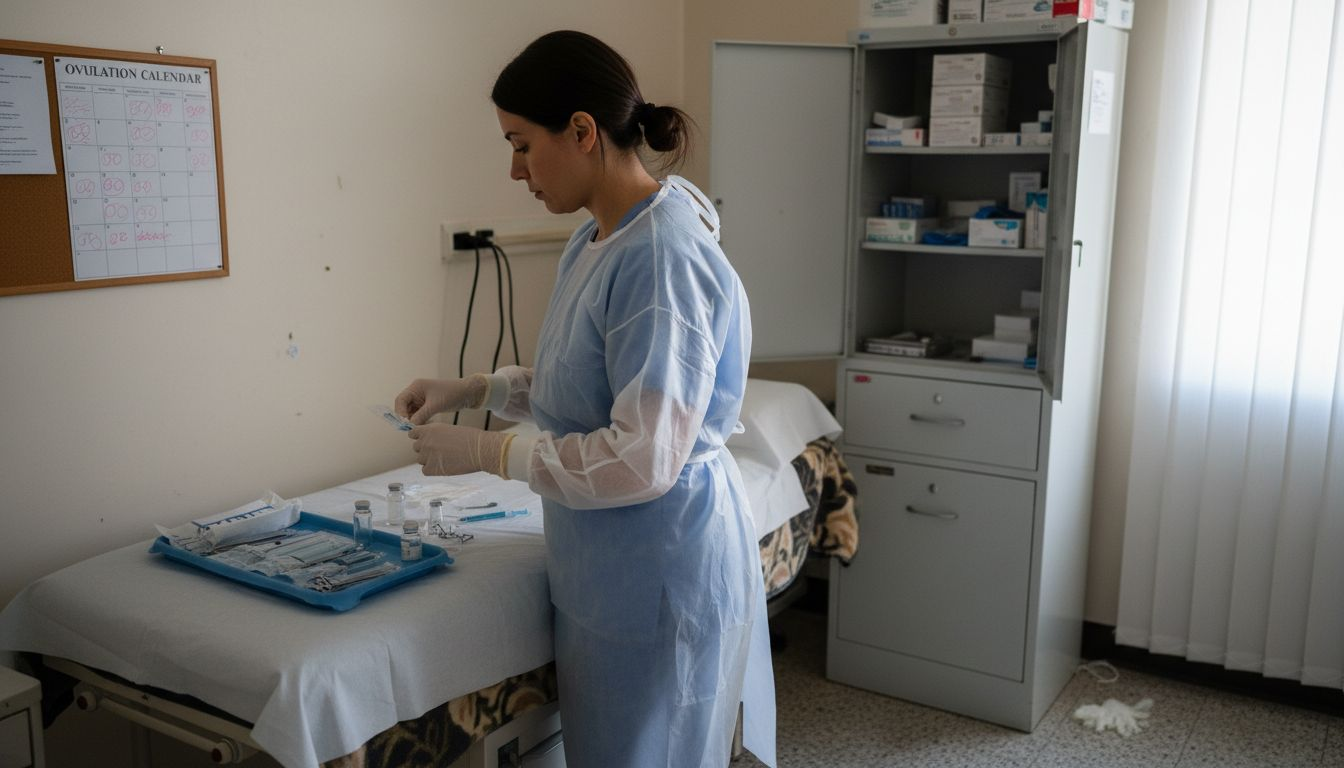
Your fertility window narrows each month. IUI eliminates variables like cervical mucus quality or sperm transport issues that can reduce your conception chances. By orchestrating the timing precisely, you’re working with biology rather than against it.
What Makes IUI Different
Unlike IVF, which involves hormone stimulation and egg retrieval, IUI is minimally invasive. You can continue working, exercising, and living normally throughout the process. Many women find this appeals to them when they’re balancing fertility treatment with their careers and life responsibilities.
IUI also pairs well with fertility medications. Your doctor may recommend medications to stimulate ovulation, ensuring your body releases eggs at the optimal moment for insemination. This controlled timing significantly improves your conception odds compared to natural cycles.
IUI works best when sperm quality is adequate and your fallopian tubes are open—conditions your doctor will verify before recommending treatment.
Pro tip: Request a pretreatment assessment that includes semen analysis and tubal patency testing; knowing these baseline factors helps your doctor optimize timing and medication protocols specifically for your situation.
Who Should Consider IUI Treatment
IUI is not one-size-fits-all, but it’s often the ideal choice for women over 35 facing specific fertility barriers. If you have unexplained infertility after a standard workup, IUI typically becomes your first real option before considering more invasive treatments like IVF.
The key requirement: your fallopian tubes must be open, you must have documented ovulation, and your partner’s sperm (or donor sperm) must show adequate motility. These three factors determine whether IUI makes sense for your situation.
Ideal Candidates for IUI
You’re an excellent candidate for IUI if you fit any of these scenarios:
Unexplained infertility: You’ve completed a full fertility evaluation with no obvious cause identified
Cervical issues: Cervical mucus problems, scarring, or anatomical issues prevent sperm from reaching your uterus naturally
Male factor infertility: Your partner has mild sperm motility issues, retrograde ejaculation, or difficulty with intercourse
Ovulatory disorders: You have irregular or absent ovulation that can be managed with medications
Donor sperm use: You’re using donor sperm for single parenthood or same-sex partnerships
Sexual dysfunction barriers: Difficulty with intercourse makes traditional conception impossible
Why IUI Works Better at Your Age
As a woman over 35, your natural conception rates decline significantly each year. IUI combined with ovarian stimulation increases the number of mature eggs available for fertilization, directly offsetting the age-related egg quality decline you’re experiencing.
Your fertility window is narrowing. IUI orchestrates perfect timing and positioning, eliminating the variables that might have worked when you were younger but are now working against you.
When IUI Is Your First-Line Treatment
Most fertility specialists recommend IUI before IVF because it’s less invasive, requires fewer medications, and carries fewer risks. If you have mild fertility issues or difficulty with intercourse, IUI gives you a meaningful chance without the complexity of egg retrieval.
IUI becomes your starting point if standard evaluation shows no major structural problems. Your doctor will likely combine IUI with ovarian stimulation medications to give you the best odds in each cycle.
When IUI Might Not Be Right
IUI isn’t recommended if both fallopian tubes are blocked or damaged. Severe male factor infertility with very low sperm count or motility also makes IVF a better choice. Significant ovulatory dysfunction that doesn’t respond to medication reduces IUI effectiveness.
Your doctor will be clear about whether your specific situation justifies IUI or whether IVF offers better success rates for you.
IUI works best when at least one fallopian tube is patent, ovulation occurs or can be induced, and sperm quality meets minimum standards for fertilization.
Pro tip: Request a pretreatment consultation that includes tubal patency testing (hysterosalpingography or sonohysterography) and semen analysis; these results determine whether IUI is realistic for your situation and help your doctor predict realistic success rates.
Types and Variations of IUI Procedures
Not every IUI cycle looks the same. Your doctor will customize your approach based on your specific diagnosis, age, ovarian reserve, and previous treatment responses. Understanding these variations helps you know what to expect and why your plan differs from another patient’s.
The main variables your fertility specialist considers are medication protocols and the number of inseminations performed per cycle. Each variation carries different success rates, costs, and physical demands.
Medication Approaches
Natural cycle IUI uses no fertility medications at all. Your doctor monitors your natural ovulation through ultrasounds and blood tests, then performs IUI when ovulation is imminent. This appeals to women concerned about medication side effects or who have regular, predictable cycles.
The downside: you’re working with just one egg. At your age, natural cycle IUI offers lower success rates than medicated cycles, though some women prefer avoiding hormonal medications entirely.
Oral medication cycles add clomiphene citrate (Clomid) or letrozole to stimulate your ovaries. These medications increase the number of mature eggs produced during ovulation, improving your odds without injectable hormones.
Oral medications are affordable, convenient, and cause fewer side effects than injections. Many women use this as their starting point before moving to injectable protocols.
Injectable gonadotropin cycles use hormones like FSH or hMG to stimulate multiple eggs. Your doctor monitors follicle development closely through ultrasounds and adjusts medication doses based on your response.
This approach produces the most eggs and gives you the highest number of fertilization opportunities per cycle. For women over 35 with diminished ovarian reserve, injectable cycles typically offer better success rates than oral medications.
This table summarizes how different IUI medication protocols impact cost, side effects, and odds of multiple pregnancy:
Protocol Type | Added Cost | Common Side Effects | Multiple Pregnancy Risk |
Natural Cycle | None | Minimal | Low (<2%) |
Oral Medication | Low to moderate | Hot flashes, mood changes | Moderate (6–9%) |
Injectables | High | Bloating, OHSS risk | Higher (10–20%) |
Single Versus Double Insemination
Your doctor might recommend a single IUI performed once during your ovulation window, or a double IUI on consecutive days. Evidence comparing single versus double IUI shows uncertain differences in live birth rates and pregnancy outcomes, meaning the choice depends on your specific situation.
Double IUI increases your cost and requires two office visits within 24 hours. Some couples see improved results; others see no meaningful difference. Your doctor will recommend based on sperm quality, ovulation timing, and your previous response to treatment.
Customization at Your Age
Women over 35 typically benefit most from injectable medication cycles combined with single or double insemination. Your declining egg quantity and quality make maximizing the number of eggs essential.
Your fertility center will adjust protocols based on how your ovaries respond to stimulation. If you produce few follicles on injectable doses, your doctor might switch protocols or recommend IVF instead.
The “best” IUI variation for you depends on your ovarian reserve, sperm quality, cycle response, and previous treatment history—not on what worked for someone else.
Pro tip: Ask your doctor to predict how many eggs you’ll likely produce with each medication option; this helps you understand whether the protocol offers enough eggs to justify the cycle cost and time commitment.
IUI Success Rates and Influencing Factors
IUI success rates vary dramatically from patient to patient. Your age, ovarian reserve, sperm quality, and treatment protocol all influence whether this cycle results in pregnancy. Understanding these factors helps you set realistic expectations and know what your doctor is optimizing.
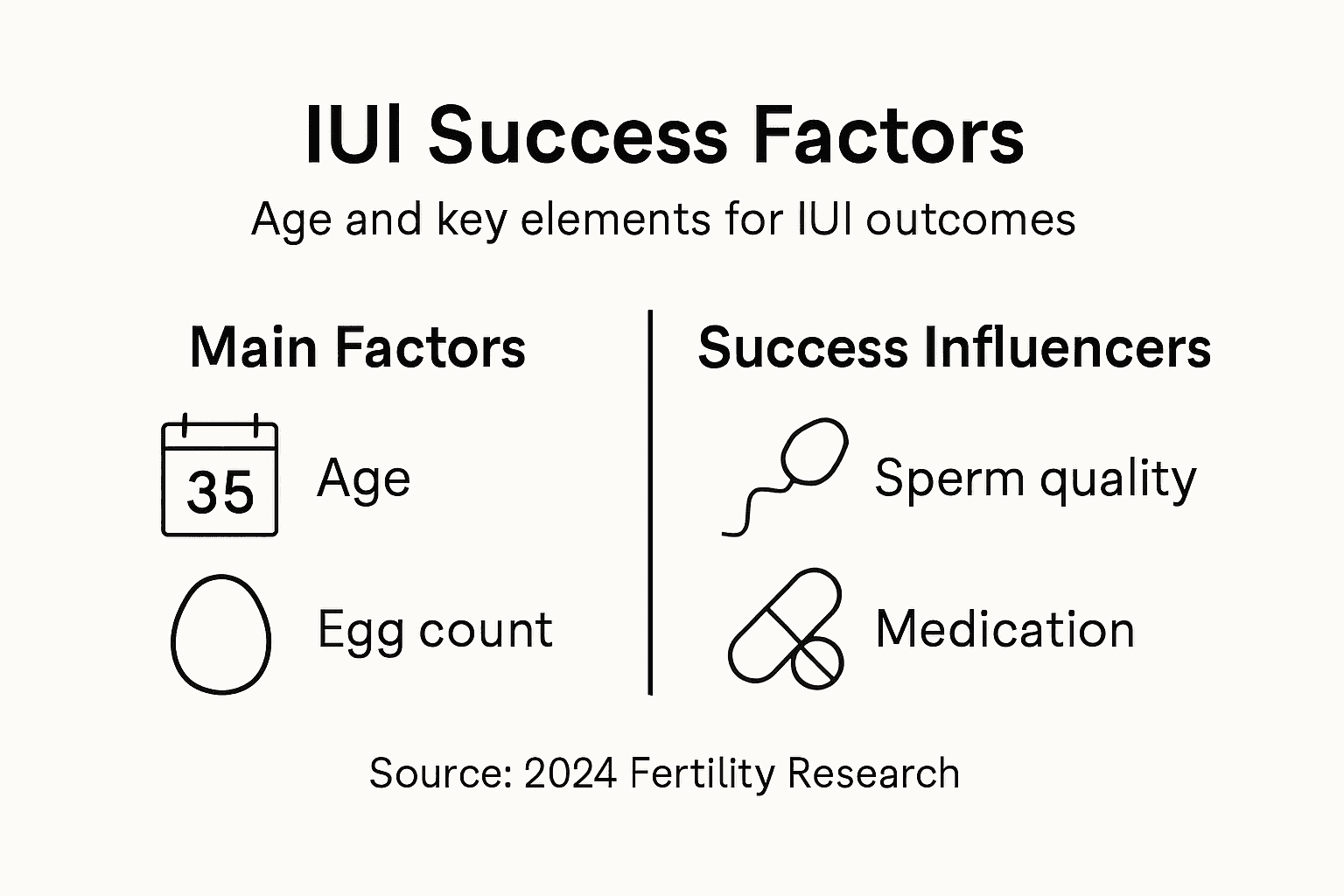
There’s no single “IUI success rate” that applies to everyone. A woman over 35 with diminished ovarian reserve faces different odds than a younger woman with unexplained infertility. Your fertility center should counsel you based on your specific situation, not general statistics.
Key Factors Affecting Your Success
Cycles with more mature follicles and higher motile sperm counts have better pregnancy outcomes. These two variables matter most: how many eggs you produce and how many healthy, moving sperm you have available for insemination.
Your success depends on:
Number of mature follicles: More eggs increase fertilization chances
Sperm motility and count: Higher quality sperm improves odds significantly
Age and ovarian reserve: Younger eggs with better quality conception rates
Infertility diagnosis: Unexplained infertility has better outcomes than severe male factor
Medication protocol: Stimulated cycles outperform natural cycles
Timing of insemination: Precise ovulation timing is critical
Why Stimulation Improves Success
IUI combined with ovarian stimulation improves live birth rates compared to expectant management in couples with unexplained infertility. This single fact drives most fertility specialists to recommend medicated IUI over natural cycle approaches.
When you use injectable hormones, you’re not relying on chance. Your doctor controls follicle development, ensuring multiple mature eggs reach ovulation simultaneously. This dramatically increases your odds compared to hoping one natural egg fertilizes.
Age and Your Personal Success Rates
Your age is the single most influential factor. Women over 35 see progressively declining success rates with each passing year. At 35, IUI success per cycle runs around 15-20 percent with good ovarian reserve. By 40, this drops to 8-12 percent. By 42, expect 5-8 percent.
These aren’t reasons to despair—they’re reasons to be strategic. Multiple cycles, excellent medication protocols, and optimized timing compound your chances. A woman doing three IUI cycles has meaningfully better odds than one cycle alone.
The Plateau Effect
Research shows a plateau effect: beyond a certain sperm count threshold, adding more sperm doesn’t improve your pregnancy odds. Your doctor won’t recommend washing your sample to produce 500 million motile sperm if 50 million achieves the same result.
This matters for your expectations. Your fertility center tailors sperm preparation to what works, not to maximum numbers.
Success rates improve dramatically with ovarian stimulation, multiple mature eggs, and adequate sperm preparation—all factors your doctor controls through treatment protocol selection.
Pro tip: Ask your doctor for your personalized success estimate based on your age, ovarian reserve, and diagnosis; national averages don’t predict your individual outcome.
Comparing IUI Costs, Risks, and Alternatives
Chosen IUI because it feels right for your situation? Understanding what it costs, what risks exist, and how it stacks against other treatments helps you make an informed decision aligned with your values and finances.
IUI isn’t risk-free, and it’s not the cheapest path to pregnancy. But for many women over 35, it offers the right balance of affordability, invasiveness, and success probability.
IUI Costs
IUI typically ranges from $500 to $2,500 per cycle without insurance coverage. This includes ultrasounds, bloodwork, sperm preparation, and the insemination procedure itself. Fertility medications add another $500 to $3,000 if you use injectable gonadotropins.
Cost-benefit analyses indicate that IUI is generally less expensive than IVF. Most women complete multiple IUI cycles before progressing to IVF, which costs $12,000 to $20,000 per cycle.
Your financial capacity affects treatment decisions significantly. Some fertility centers offer package pricing for multiple IUI cycles, reducing per-cycle costs if you commit upfront.
Here’s a comparison of common fertility treatment options for women over 35:
Treatment Option | Procedure Complexity | Typical Cost (per cycle) | Success Rate (age 35-40) |
Timed Intercourse | Minimal monitoring | $200–$800 | 5–10% |
IUI (with medication) | Simple, office-based | $1,000–$3,500 | 8–20% |
IVF | Surgical, involves egg retrieval | $12,000–$20,000 | 25–40% |
Known Risks with IUI
IUI risks include mild cramping, ovarian hyperstimulation if fertility drugs are used, and a small increased chance of multiple pregnancy. These are generally minor compared to IVF risks.
Ovarian hyperstimulation syndrome (OHSS) is rare with oral medications but more common with injectable hormones. Mild OHSS causes bloating and mild pain. Severe OHSS requires hospitalization but occurs in less than 1-2 percent of cycles.
Multiple pregnancy risk increases with stimulated IUI because you’re producing multiple eggs. Twins occur in roughly 8-10 percent of IUI pregnancies with stimulation, compared to 1 percent naturally.
IUI Versus IVF: The Real Trade-Off
IVF offers higher success rates but requires egg retrieval—an invasive procedure with inherent risks. You’ll take stronger medications, produce more eggs, and face risks of bleeding, infection, or anesthesia complications.
IUI keeps you out of the operating room. You avoid egg retrieval and embryo transfer. This appeals to women hesitant about invasive procedures or concerned about medication burden.
But IVF succeeds at higher rates, especially for women over 40 with low ovarian reserve. Your doctor should counsel you: are you willing to do multiple IUI cycles hoping one works, or would IVF’s better odds justify the higher cost and invasiveness?
Other Alternatives
Timed intercourse with ovulation monitoring costs minimal—just ultrasounds and blood tests. Success rates are lowest but cost is negligible. Many women start here before considering IUI.
Fertility supplements and lifestyle optimization work for some. Acupuncture, stress reduction, and dietary changes support fertility but don’t replace medical treatment.
IUI balances affordability and invasiveness better than IVF for many women, but requires honest assessment of your age, ovarian reserve, and willingness to complete multiple cycles.
Pro tip: Request a financial counselor review: calculate total cost across three cycles of IUI versus one IVF cycle, then compare success rates; this math often clarifies which path makes sense for your budget and timeline.
Take Control of Your Fertility Journey with Personalized IUI Solutions
Facing challenges like diminished ovarian reserve or unexplained infertility can feel overwhelming. The article highlights how Intrauterine Insemination (IUI) directly places healthy, motile sperm into the uterus at the perfect time to boost your chances of conception. If timing and quality of sperm are critical factors in your journey, you deserve a treatment plan tailored specifically to your unique needs and reproductive health.
At Rejuvenating Fertility Center, we specialize in personalized fertility treatments including advanced IUI protocols that combine precise ovulation monitoring and medication strategies designed for women over 35. Our expert team led by Dr. Zaher Merhi ensures your IUI cycle maximizes success by addressing your ovarian reserve and sperm quality with cutting-edge techniques. Discover how our regenerative therapies and supportive wellness programs complement your treatment to enhance your fertility naturally.
Don’t wait while your fertility window narrows. Learn more about how our expert-guided IUI services can make a difference by visiting our homepage and start your consultation today. Embrace a hopeful future with care that understands your unique fertility story.
Frequently Asked Questions
What is IUI and how does it work?
IUI, or intrauterine insemination, is a fertility procedure that places sperm directly into the uterus to improve the chances of fertilization. It bypasses the cervix, shortening the distance sperm must travel to reach the egg, thereby enhancing the timing of conception.
Who are the ideal candidates for IUI?
Women over 35 facing challenges such as unexplained infertility, cervical issues, mild male factor infertility, or those using donor sperm are often good candidates for IUI. Successful candidates generally have open fallopian tubes, documented ovulation, and adequate sperm motility.
What are the potential success rates for IUI?
Success rates for IUI can vary widely based on individual factors like age and sperm quality. Women over 35 typically experience lower success rates, ranging from 15-20% at age 35 to about 5-8% by age 42.
How does IUI compare to IVF?
IUI is less invasive and generally less expensive than IVF. While IUI offers a good chance for many women, especially those with mild fertility issues, IVF has higher success rates, especially for older women or those with more significant fertility challenges.
Recommended

