Can You Get Pregnant at 44 Naturally? Real Odds and How Long to Try
Quick answer: Can you get pregnant at 44 naturally? Yes. Many women do, as long as they still ovulate and the fallopian tubes and sperm are healthy. In a North American study of couples trying on their own, about 28% of women aged 40 to 45 were pregnant within 6 cycles and about 55% within 12 cycles. At 44, time matters more than at any earlier age, so the best plan is to try with good timing for about 3 months while getting checked, then add treatment such as gentle IVF, ovarian PRP or donor eggs if it hasn't happened.
In this article
Can you get pregnant at 44 naturally? The short answer
You can get pregnant at 44 naturally if you are still ovulating, your tubes are open, your partner's sperm is healthy and your uterus is ready to hold a pregnancy. Age lowers the odds each month. It does not switch fertility off.
The question shows up in search in dozens of forms: "is 44 too old to get pregnant", "can a 44 year old get pregnant naturally", "i got pregnant at 44 naturally success stories". One of the top Google results for this exact search is a Reddit thread titled "Any Mom's 44+ When Having Baby?", full of women who did. On a UK fertility forum this week, a post titled "Turned 41 on Monday, got my BFP yesterday" sat next to "TTC at 39 but might be in peri". Women in their 40s want two things: proof that it happens, and a plan that doesn't waste months.
Three things change at 44, and each one has an answer:
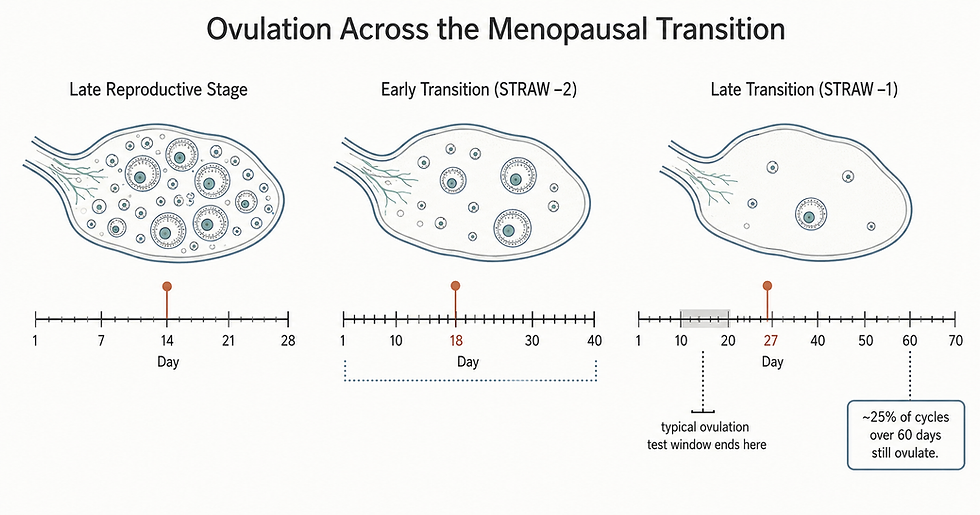
Fewer eggs ovulate in a useful way. Cycles can become shorter or irregular as perimenopause begins, which makes timing harder.
More eggs carry chromosome errors. This is the main reason pregnancy takes longer and why miscarriage is more common.
The clock runs faster. A wait of a year costs more at 44 than at 34, so testing should start early, alongside trying.
At Rejuvenating Fertility Center (RFC), most of the women we see are over 40, and many were told elsewhere that their age was the end of the conversation. We start from what is possible. That can mean natural attempts with good monitoring, three types of IVF including mini and natural cycle IVF, ovarian PRP rejuvenation, or donor eggs, in the order that fits you.
When the answer is yes: what natural conception at 44 needs
Natural pregnancy at 44 is most likely when four things line up. Check each one early, because each is testable within a few weeks.
You still ovulate
If your periods come every 21 to 35 days, you are probably ovulating. An ovulation predictor kit, a mid-luteal progesterone blood test or a cycle-day ultrasound confirms it. Perimenopause can bring cycles where no egg is released, so a regular calendar is a good sign, not a guarantee.
Your timing is right
The fertile window is the 6 days ending on the day of ovulation, and the chance of pregnancy is highest with intercourse every 1 to 2 days during that window, according to the American Society for Reproductive Medicine's committee opinion on optimizing natural fertility. More frequent sex does not lower the odds. Age does not seem to change the length of the window, so the same rule applies at 44.
The tubes, uterus and sperm are healthy
Blocked tubes, fibroids, polyps or a low sperm count can stop a pregnancy that age alone would allow. A hysterosalpingogram (HSG) or saline sonogram checks the tubes and uterine cavity, and a semen analysis checks your partner. These tests are fast, and they rule out problems that waiting can't fix.
Your general health supports a pregnancy
The same ASRM opinion advises stopping smoking and recreational drugs, keeping alcohol and caffeine minimal to moderate, and it notes that using a lubricant did not change monthly pregnancy rates in couples trying. Blood pressure, blood sugar, thyroid function and a healthy weight matter more at 44, because they also shape how safe the pregnancy will be.
When it's harder, and what helps
When natural conception at 44 is slow, there is almost always a specific reason, and each reason has a matching step. Here are the common ones, paired with what helps.
Irregular or skipped cycles
Perimenopause can make ovulation unpredictable. What helps: cycle monitoring with ultrasound and blood tests to pinpoint ovulation, or medication to trigger it. If cycles have become very irregular, our post on getting pregnant during perimenopause explains what each cycle pattern means.
A low AMH result
Many women at 44 are told their anti-Müllerian hormone (AMH) is low and assume natural pregnancy is off the table. The research says otherwise: in a 2017 JAMA study of women aged 30 to 44, women with a low AMH (under 0.7 ng/mL) were just as likely to conceive within 6 and 12 cycles as women with normal AMH. What helps: reading AMH as a guide to treatment, not a verdict. If your FSH is also high, our guide to high FSH and low AMH walks through the options in order.
Egg quality and chromosome errors
This is the biggest change at 44. Most chromosome errors in embryos come from the egg, and they become far more common with age. What helps: a cycle of mini or natural IVF with genetic testing of embryos, steps that support egg health (see our post on how to improve egg quality after 40), or donor eggs, which carry the chromosome profile of a younger donor.
Pregnancy loss
Miscarriage is more likely at 44, and two or more losses deserve a full evaluation. What helps: testing for causes beyond the egg, such as immune, clotting, thyroid and uterine factors, through our reproductive immunology program. Our guide to what recurrent miscarriage specialists look for lists the tests.
Months of trying with no pregnancy
What helps: moving to treatment sooner rather than later. RFC's founder was the first US physician to develop ovarian PRP protocols for diminished ovarian reserve, and RFC's published research includes live births in women over 45 using their own eggs after adipose-PRP. In one of those cases, a 46-year-old conceived naturally six months after adipose-PRP and delivered at 47, though the authors note that controlled studies are still needed.
What the research shows about natural pregnancy at 44
The research gives real numbers for anyone asking whether you can get pregnant at 44 naturally, and they are better than many women expect. Here are the key findings.
A 2017 study in the American Journal of Obstetrics and Gynecology followed 2,962 couples who were trying to conceive without fertility treatment. Among women aged 40 to 45, 27.6% were pregnant within 6 cycles and 55.5% within 12 cycles, compared with 62.0% and 77.9% for women aged 28 to 30. Each cycle, the older group was about 60% less likely to conceive. The 40 to 45 group was small (38 women), so the figures are estimates, but they match ASRM's statement that fertility at 40 is about half that of women in their late 20s and early 30s.
The main reason is chromosomes. A 2019 paper in the Journal of Assisted Reproduction and Genetics notes that chromosome errors in embryos rise from about 30% in women in their early 30s to nearly 90% in women over 44. Many of those embryos never implant, and some lead to an early loss. That is why a BMJ study of 421,201 pregnancies found miscarriage risk was 9.8% at ages 25 to 29, 32.2% at 40 to 44 and 53.6% at 45 and older.
Measure | Women 28–30 | Women 40–45 (or 40–44) | Source |
|---|---|---|---|
Pregnant within 6 cycles, no treatment | 62.0% | 27.6% | AJOG 2017 |
Pregnant within 12 cycles, no treatment | 77.9% | 55.5% | AJOG 2017 |
Pregnancies ending in miscarriage | 9.8% (ages 25–29) | 32.2% (ages 40–44) | BMJ 2019 |
Embryos with a chromosome error | about 30% (early 30s) | nearly 90% (over 44) | JARG 2019 |
Two more findings change how you should read your own test results. The JAMA study above found that a low AMH did not predict a lower chance of natural conception, and the ASRM 2026 committee opinion on fertility evaluation states that ovarian reserve "is a poor predictor of fertility, but can be used to guide fertility treatments." ASRM's 2020 opinion on ovarian reserve testing adds that these tests should not be used "to deny access to infertility treatment."
For comparison, US national data on IVF with a woman's own eggs show a maximum cumulative live birth rate of 8.6% at 44, after several cycles. That figure is from women who were already infertile, so it is not a direct comparison with natural attempts, but it shows why the approach at 44 is often gentle IVF focused on quality, ovarian rejuvenation, or donor eggs rather than repeated high-dose cycles.

How long should you try to get pregnant at 44 naturally before getting help?
At 44, try naturally for no more than 3 months before seeing a fertility specialist, and book the first tests now rather than after months of waiting. ASRM's general advice is to consult a specialist after 6 months for women over 35, but at 44 most specialists, including RFC, start an evaluation at once or within the first few months.
None of the top results for this search answer this question, yet it is the one that changes outcomes most. The AJOG study shows that roughly half of the women in their 40s who conceived on their own did so in the first 6 months. After that, each month without testing is a month the cause, if there is one, goes unfound.
Here is a practical timeline:
Month 0: book a fertility consultation. Ask for AMH, cycle-day-3 FSH and estradiol, an antral follicle count by ultrasound, thyroid and prolactin tests, a tubal test and a semen analysis.
Months 1 to 3: keep trying naturally with intercourse every 1 to 2 days in the fertile window, while the results come in. Use ovulation kits or monitored cycles if your periods are irregular.
Month 3: review results with your doctor. If everything is normal and you are ovulating, you may choose a few more monitored natural or medicated cycles.
Any time a problem is found: treat it straight away. Blocked tubes, a sperm problem or a uterine polyp won't improve by waiting.
If not pregnant by month 3 to 6: move to treatment. That may be mini or natural IVF, ovarian PRP followed by natural attempts or IVF, or donor eggs.
Trying naturally and starting treatment are not competing plans. Many women at RFC keep trying at home while they complete testing, and some conceive during that time.
Your options at 44, step by step
Every option below is open at 44, and RFC has no age cutoff and no weight cutoff for any of them. The right order depends on your cycle, your test results and how you feel about using your own eggs.
Monitored natural cycles. Ultrasound and blood tests time ovulation so each attempt counts. A good first step if your tests are normal.
Natural cycle or mini IVF. Low or no stimulation, focused on the best egg or two each cycle, with fewer medications. Our post on IVF success rates over 40 explains what the numbers mean at 43 and 45.
Ovarian PRP or adipose-PRP rejuvenation. Designed to support the ovaries in women with low reserve, followed by natural attempts or IVF. Learn how the two versions compare in PRP for ovaries vs. adipose-PRP.
Donor eggs. The most reliable path at 44 when your own eggs have not worked. RFC's donor egg program reports 95% egg thaw survival and an 82% clinical pregnancy rate. Our comparison of donor egg IVF and IVF with your own eggs can help you decide.
Recurrent loss care. If pregnancies start but do not continue, immune and uterine testing come first.
If you're also weighing what the next year could look like, our post on pregnancy at 45 walks through four real situations and the path that fits each. You can see what each treatment costs on our pricing page.
Patients who live far away can do most monitoring near home and travel to us for key steps. One RFC patient started treatment at 50 and was pregnant at 53, and our work has been covered twice by Forbes (see RFC in the news).

Questions worth asking at your first visit:
Am I ovulating every month, and how will we confirm it?
Are my tubes open, and has my partner had a semen analysis?
What do my AMH, FSH and antral follicle count mean for the plan, not just the odds?
How many natural or monitored cycles do you suggest before treatment, given my age?
Would mini IVF, ovarian PRP or donor eggs fit me, and in what order?
Frequently asked questions
Can you get pregnant at 44 naturally?
Yes. Women aged 40 to 45 who were trying without treatment had about a 28% chance of pregnancy within 6 cycles and about 55% within 12 cycles in a 2017 study. Success depends on ovulation, open tubes, healthy sperm and a healthy uterus, so testing early helps.
What are my chances of getting pregnant at 44 naturally each month?
Women in their early to mid 40s are about 60% less likely to conceive in any given cycle than women in their early 20s, according to the same study. That still means many pregnancies happen within the first 6 to 12 months for women who ovulate and have no other fertility problem.
Is 44 too old to get pregnant?
No. Fertility is lower at 44 than at 34, but it is not gone, and many women conceive naturally or with treatment at this age. RFC has no age cutoff and treats women in their mid and late 40s.
Is pregnancy at 44 high risk?
Pregnancy at 44 carries higher risks of miscarriage, high blood pressure and gestational diabetes, so it is usually followed more closely by an obstetrician or a maternal-fetal medicine specialist. Many women at this age have healthy pregnancies with that extra care.
How long should I try to get pregnant at 44 before seeing a doctor?
Book a fertility consultation now and plan to try naturally for no more than about 3 months before reviewing your results. ASRM advises women over 35 to see a specialist after 6 months, and at 44 an earlier start saves time.
Does a low AMH mean I can't get pregnant naturally at 44?
No. A 2017 JAMA study found that women with a low AMH were just as likely to conceive naturally within 6 and 12 cycles as women with normal levels. AMH helps plan IVF and other treatment, but it does not predict whether you can conceive on your own.
The bottom line
Can you get pregnant at 44 naturally? Yes, and it happens more often than many women are told. The smartest plan at 44 is to try with good timing while you get tested, and to move to treatment within a few months if it hasn't happened. Every month you spend with a clear plan is a month well used.
If you're 44 and want a plan built around what is still possible, book a consultation with Rejuvenating Fertility Center. Our doctors specialize in hard cases, with no age cutoff and no weight cutoff, and if you're under 40 with a straightforward history, our sister clinic Aurea Fertility Center may be a better fit.